

From 4 Foot Farm. We sell the products featured here. Images are illustrative, not customer testimonials.
It was on sale. You had a coupon. Then half of it went in the trash. That bargain just got expensive.
Check these seven traps before your next shop. The goal is money left in your account—not a receipt full of discounts.
1. The bigger bag with a higher unit price.
Big does not always mean cheap. Look at the price per ounce or pound on the shelf label. Compare the same kind of food in the same unit.
Example: A 16-ounce bag for $2 costs 12.5 cents an ounce. A 32-ounce bag for $5 costs about 15.6 cents an ounce. Two small bags give you the same 32 ounces for $4.
That is a dollar you keep without eating a bite less.
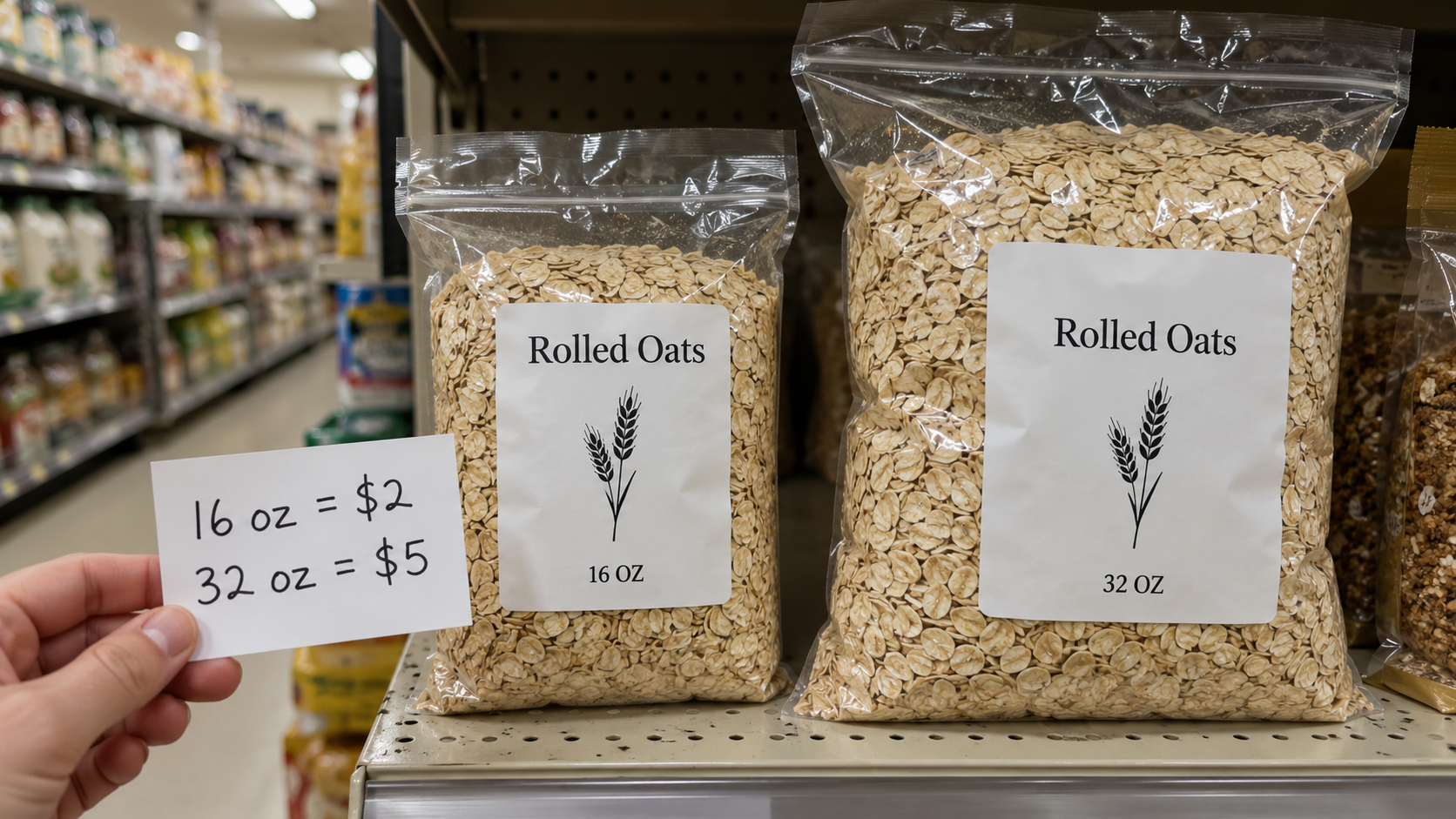
Made-up prices to show the math—not a current store offer. In this example, two small bags cost $1 less than one large bag.
2. The sale food that needs five extra ingredients.
A cheap cut of meat looks good—until the recipe calls for a sauce, fresh herbs, and three things you never keep at home.
Before you buy the deal, name the whole meal. Can you finish it with food you have or will use again soon? If not, add those costs before calling it a saving.
A familiar meal with one sale item is often easier to use than a whole new recipe built around a bargain.
The same rule applies if you want to grow food to save money: work out what you will use before buying the supplies.
SPONSORED · 4 FOOT FARM
Grow food. Skip the expensive false starts.
Know what you need before you buy it.
A cart full of pots and gadgets is not a food-saving plan. Start with one food you eat and a spot that suits it. Get the steps for what to buy, what to skip, and what to do next.
3. The coupon for food you never wanted.
A coupon can lower the price. It cannot make an unwanted food useful.
Ask: Would this replace something already on my list? Then compare the final price with the plain version you usually buy.
A discount on an extra purchase still leaves less money in your account. Let the list lead. Let the coupon help only when it fits.
4. The bulk pack you cannot finish.
Picture the whole pack at home. Will you eat it while it is good? Do you have room to store or freeze it safely?
If the answer is no, skip it. Buying food you cannot finish is like paying for a second bag you leave at the store.
5. The cheap dinner you never cook.
You planned dried beans, homemade bread, and a long recipe. Then work ran late. Everyone was hungry. Takeout won.
Keep one simple meal you can manage when you are tired: eggs and toast, a freezer portion, or another easy favorite.
A modest convenience food that gets eaten can work better for your budget than a cheaper ingredient that never becomes dinner. Count the meal you actually make.
6. The extra trip for a tiny discount.
A few cents off one item can disappear into fuel, bus fare, or the extra things that land in your basket.
Put nearby deals on a list for a trip you already need to make. Make a special trip only when the full savings beat the full cost.
There is no prize for visiting the most stores. The goal is to keep more money after the shopping is done.
7. The growing setup you buy before you have a plan.
Buying containers, gadgets, and every kind of seed can turn a food-saving idea into another big bill.
Begin with one food you often buy and one suitable spot. Check the plant’s light and space needs before spending. A pot of loose-leaf lettuce may be a simpler first step than a room full of equipment.
Growing takes time, care, and supplies. The point is to build something useful—not buy a new pile of stuff.
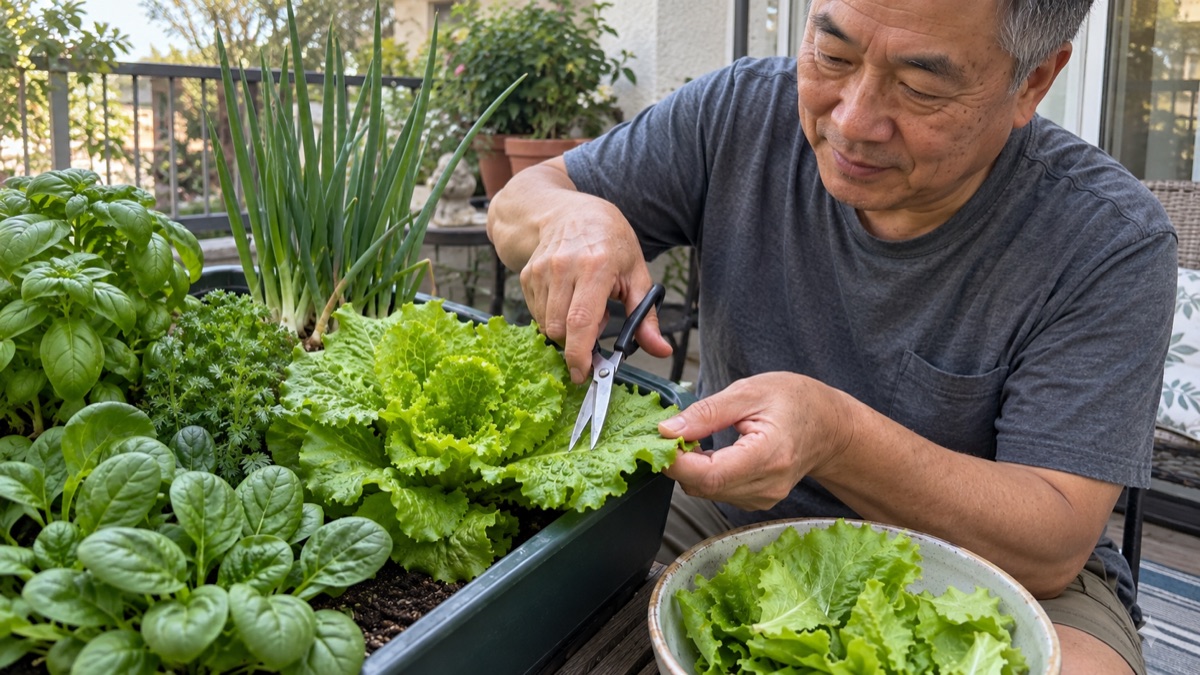
A small, useful start beats buying a whole setup before you know what you need.
SPONSORED · 4 FOOT FARM
Don’t turn grocery savings into a pile of unused gear.
Get the steps before you buy the setup.
You want food on the table, not another project you give up on. Start with one food and a suitable spot. Follow the pictures and simple steps instead of buying supplies and hoping for the best.
| Show Me What to Start With → |
See the steps and what you get in the complete Blueprint.
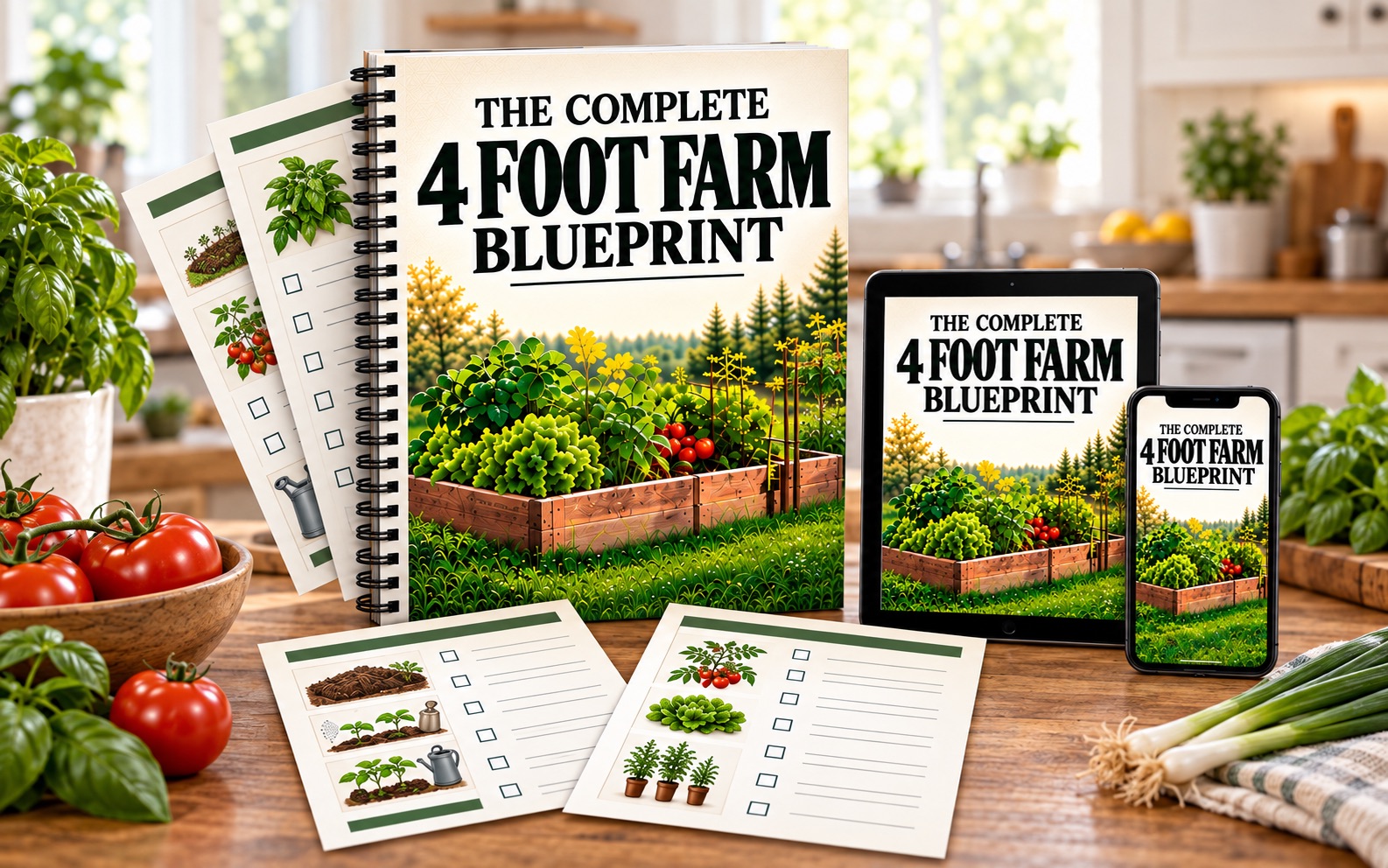
Digital plans. Open them on your phone, tablet, or computer.
The complete 4 Foot Farm Blueprint brings the 10 Action Plans together. Use the Quick Start and Container Food Plan to choose your first setup. Build from there as you learn.
Choose an indoor or outdoor setup that fits your light and space. Buy what that setup needs. Start using it. Build from there.
P.S. ALREADY HAVE THE BLUEPRINT?
Already own the digital Blueprint? Keep its practical companion beside your plants. The printed, spiral-bound Field Guide puts step-by-step help and quick checks within reach.
Written for everyday households. Food costs and growing results vary with what you eat, local prices, space, light, supplies, and care.