

From 4 Foot Farm. We sell the products featured here. Images are illustrative, not customer testimonials.
You buy the store brand. You skip the fancy snacks. Then you see the receipt and think, What else am I supposed to cut?
Start with the food you already buy. These seven changes can keep more of it on your plate—and more of your money at home.
1. Price three dinners you already eat.
Start with your usual meals, not a stranger’s perfect meal plan. Write down the cost of the ingredients you use for three dinners. Divide each total by the portions it makes.
Now you have a real choice: which dinner gives your household the most meals for the money? Make that one more often. Keep the pricier favorite for a night you will enjoy it.
Try this: Use the amounts that go into the meal. A whole bottle of oil does not belong in the cost of one dinner.
2. Use one pack in two meals.
Half a cabbage for slaw can leave half a cabbage getting old. Before you buy it, give the other half a job: a stir-fry, soup, or another meal your family likes.
Do the same with tortillas, yogurt, peppers, and other foods you rarely finish. Two planned uses beat buying five extra ingredients to rescue one leftover.
SPONSORED · 4 FOOT FARM
You’ve cut back. What’s left to cut?
Start changing where some of your food comes from.
You can chase a cheaper bag of greens every week. Or start growing some at home. Begin with one food, one small spot, and steps that show you what to do first.
3. Freeze dinner for a tired night.
When a meal makes extra, set aside a portion right away. Label it with the food and date. Freeze it for a busy night instead of hoping someone will want it again tomorrow.
You are making the easy choice cheaper. On the night you are worn out, a ready meal at home can keep a takeout order off the bill.
For safety, put leftovers in shallow containers and refrigerate within two hours—one hour above 90°F. Use refrigerated leftovers within three to four days, or freeze them.
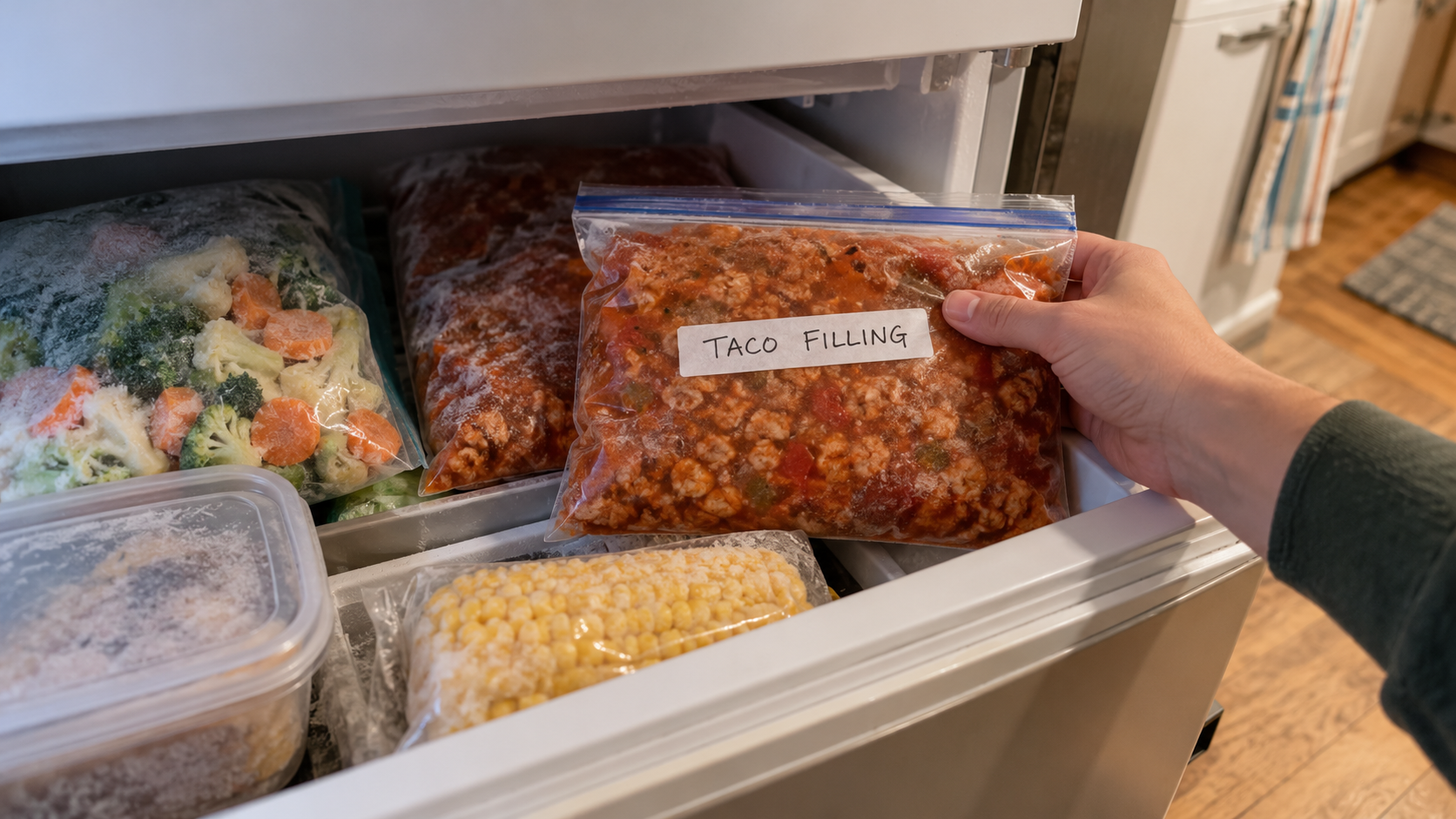
A labeled meal you like is a useful backup for a tired night. Freeze portions in food-safe containers or bags.
4. Count the cost of chasing a bargain.
A cheaper store is not always a cheaper trip. Add the extra fare, fuel, delivery fees, and any added purchases before you chase a small discount.
If the savings still make sense, go. If they do not, keep a short list for the next time you are already nearby.
5. Buy the amount you will finish.
A lower price per ounce helps only if you use the food. If the bigger bag means throwing half away, the smaller one can be the better buy.
Before reaching for bulk, ask two things: Where will I store it? When will we finish it? If you cannot answer, leave it on the shelf.
This is especially useful for salad greens, bread, and large tubs of food you only use a little at a time.
6. Keep one favorite in the budget.
A budget you hate is hard to keep. Pick one food or meal that makes the week feel good. Put it in the plan on purpose.
Then look for a change you will barely miss somewhere else: food you keep tossing, a brand you do not care about, or an extra store trip.
You are looking for waste you can cut—not a smaller life.
7. Grow one food you keep buying.
Look at your last few grocery lists. Do leafy greens show up again and again? A small pot of loose-leaf lettuce can be a useful place to begin.
When a plant is established, pick a few usable outer leaves and leave most of the small leaves to keep growing. That is different from pulling up the whole plant for one meal.
Start with a food you eat. Give it enough light and room. Indoors, a dim window may need a proper plant light. A small start will not replace your grocery run, but it can replace some repeat purchases over time.
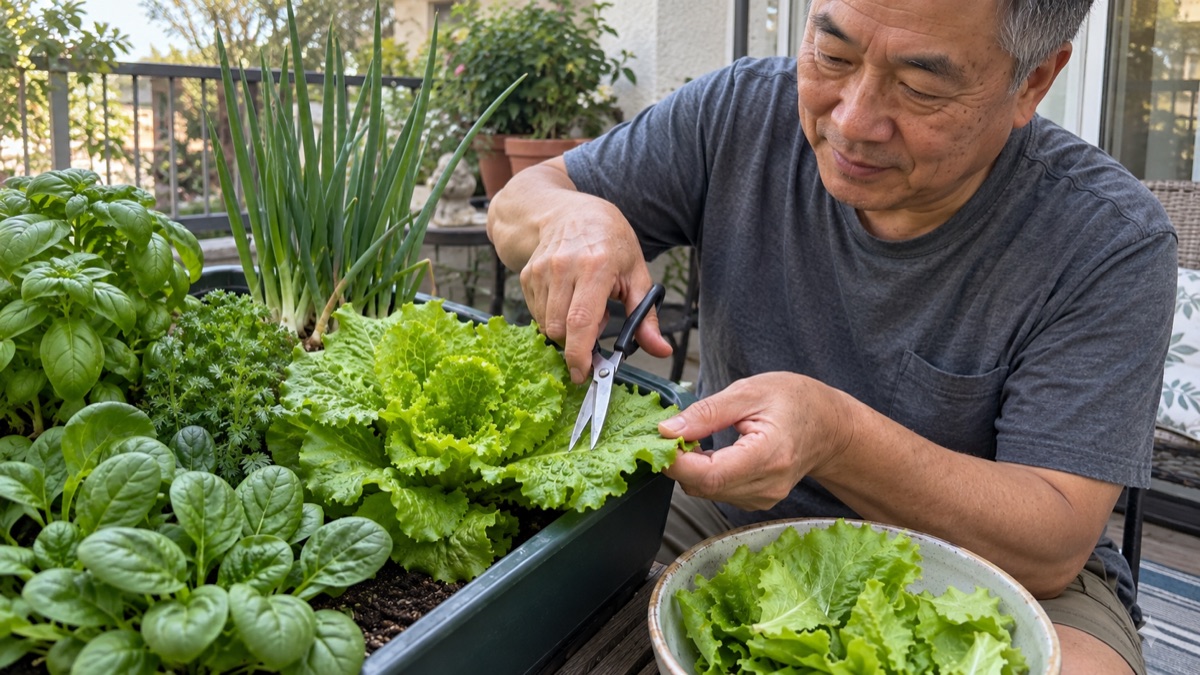
Pick a few usable outer leaves and leave most of the smaller leaves to grow. Choose a spot with enough light.
SPONSORED · 4 FOOT FARM
The store sets its prices. You can grow some of your food.
Start with one food you already eat.
You have already cut back. Give yourself another option: a small food-growing setup at home. Get the picture-led steps for choosing your first food, finding its spot, and caring for it. Start taking back a little control—one ingredient at a time.
| Show Me My Food Backup Plan → |
See the steps and what you get in the complete Blueprint.
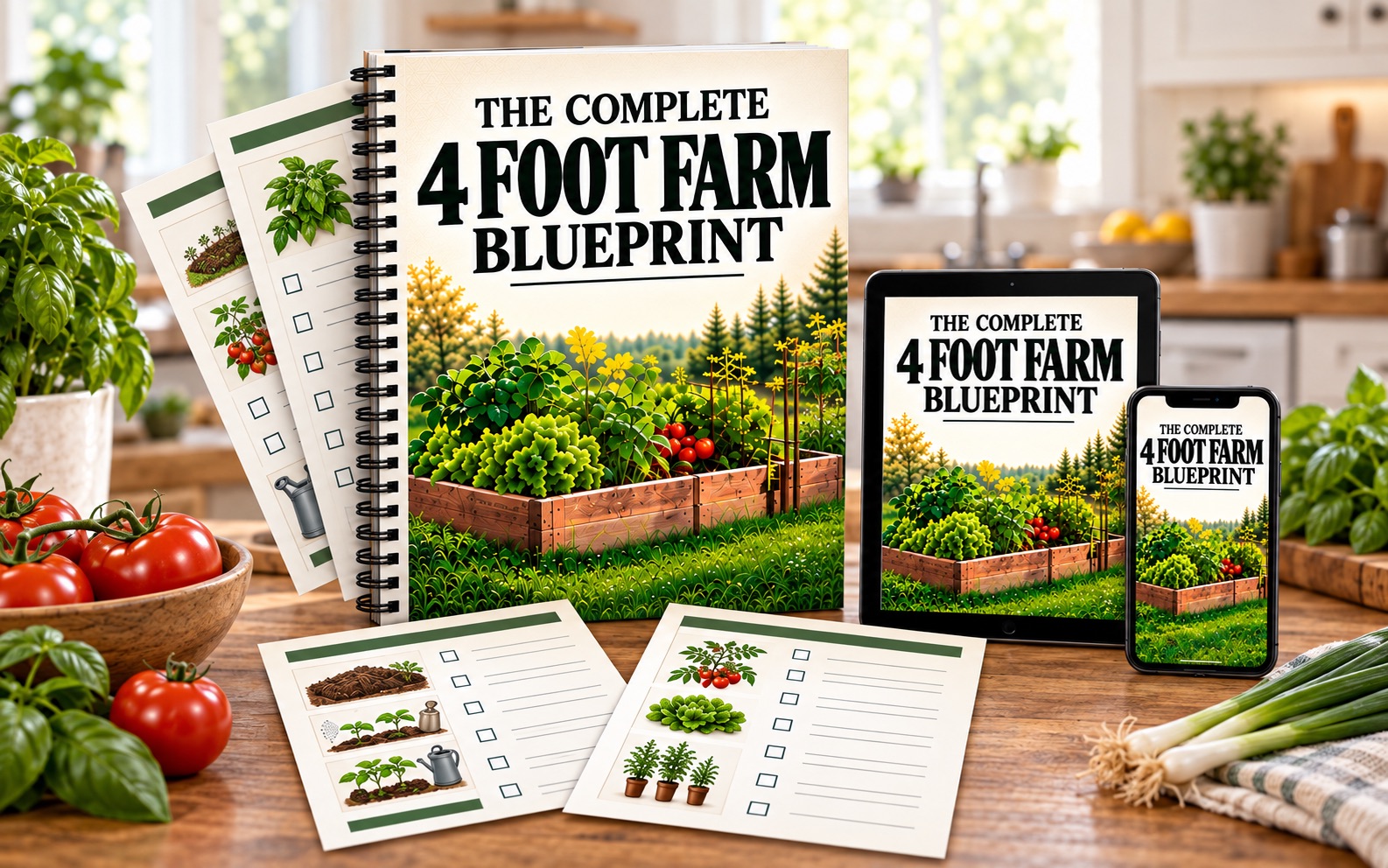
Digital plans. Open them on your phone, tablet, or computer.
The 4 Foot Farm Blueprint walks you through small-space setups, indoor options, and the next step. Match your first food to your light and room before you buy supplies.
P.S. ALREADY HAVE THE BLUEPRINT?
Keep the next step where you can see it. The printed, spiral-bound Field Guide puts the steps and quick checks beside your plants—so your phone can stay out of the dirt.
Written for everyday households. Food costs and growing results vary with what you eat, local prices, space, light, supplies, and care.