

Same cart. Bigger bill.
You switch to store brands. Put a few things back. The total still makes you wince.
If you already shop carefully, another lecture about coupons isn’t much help.
The goal here is simple: keep more of the food you buy—and more of the money you work for.
These seven changes tackle the small costs that slip past a shopping list. The last one starts at home, with something you might already have in the fridge.
1. Check your kitchen before your cart.
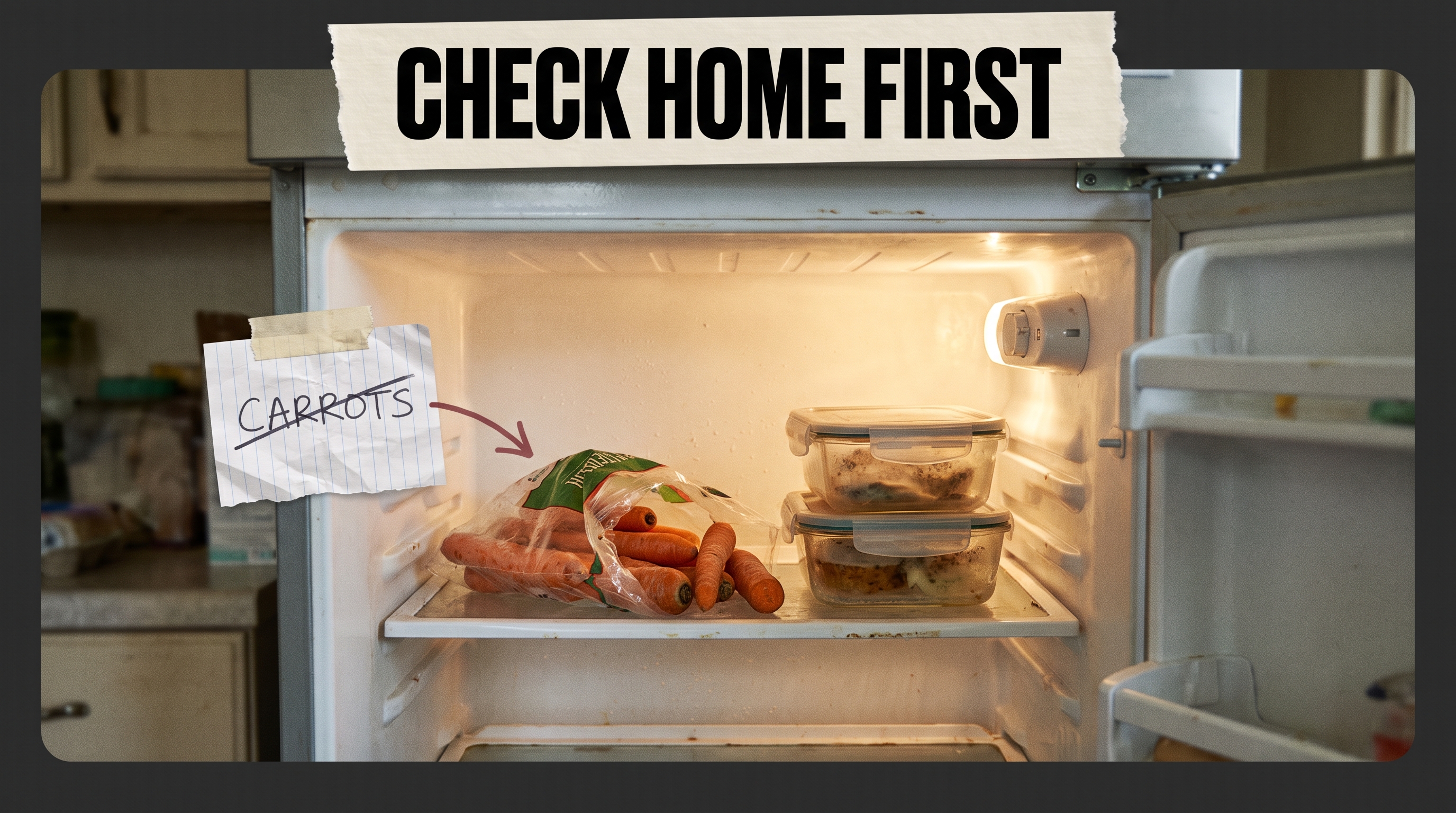
Check the fridge, freezer and pantry before making your list. Take a quick photo if that helps.
Half a bag of carrots left? Build dinner around those first. Don’t pay for another bag you don’t need.
2. Read the little price—not just the big one.
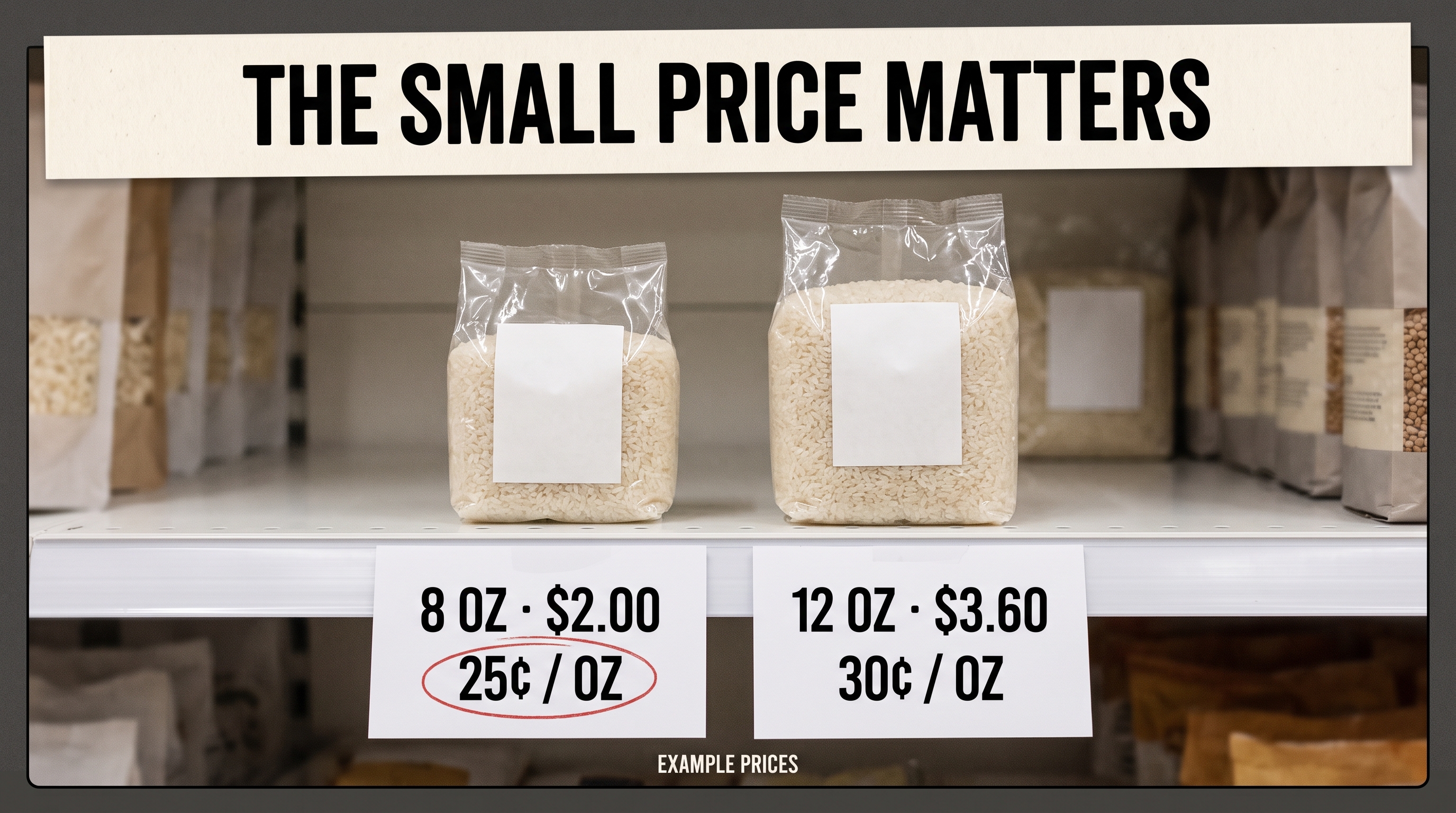
The shelf’s unit price shows the cost per ounce or pound. Compare the same unit.
Example: 8 ounces for $2 is 25¢ an ounce. Twelve ounces for $3.60 is 30¢. Bigger is not always cheaper.
And a cheap giant bag is no bargain if half goes in the trash.
3. Give a sale item a job before buying it.
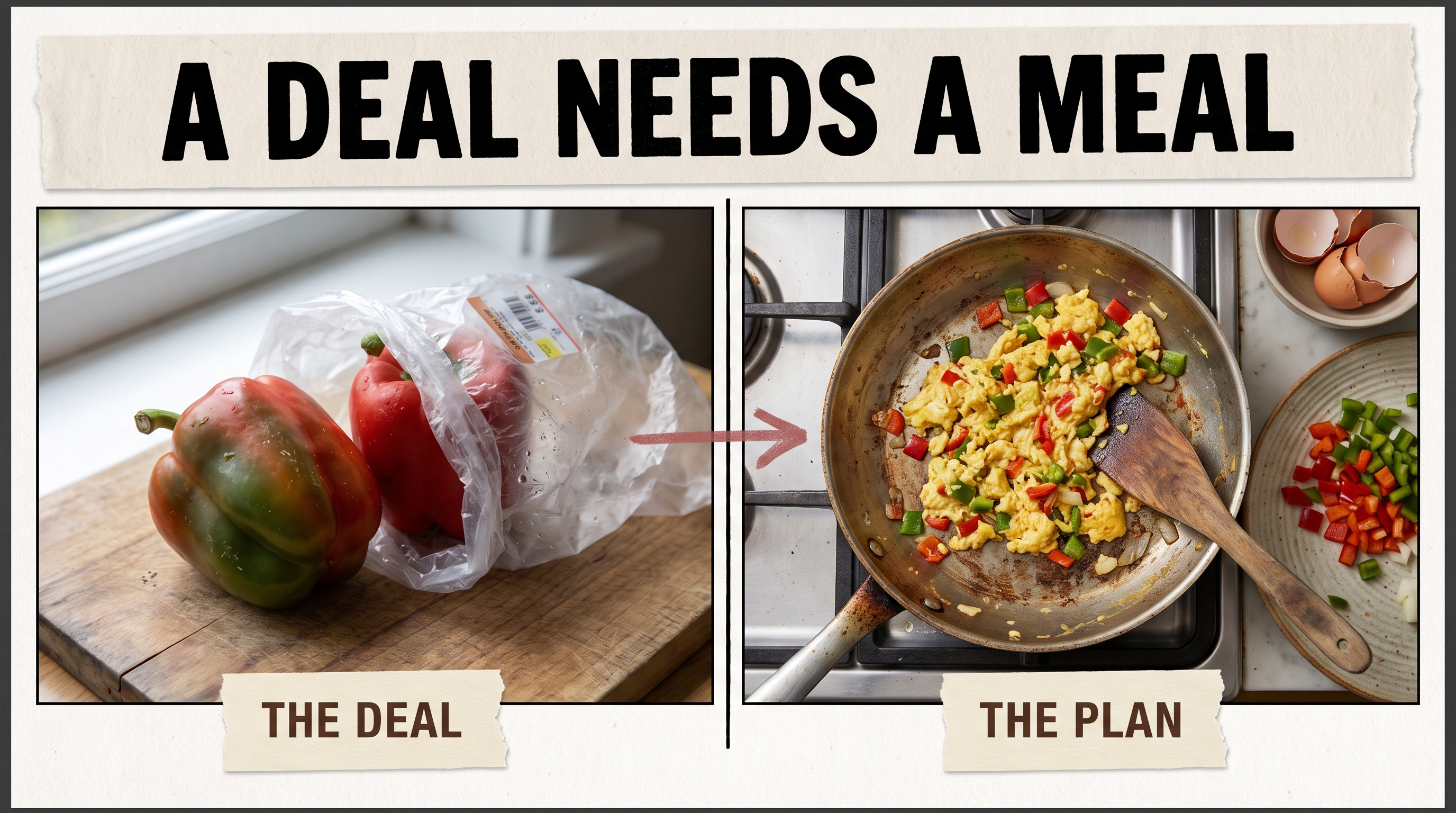
Before a bargain goes in the cart, name the meal it will go into.
Peppers on sale? Use some in fajitas and the rest in eggs. Buying five extras to use one sale item can wipe out the saving.
Your next grocery saving could start at home.
Which foods can you pick from and leave growing for another meal? Find a small-space starting point for a food you already eat.
See the pick-and-grow-again plan →4. Give food that needs using its own spot.
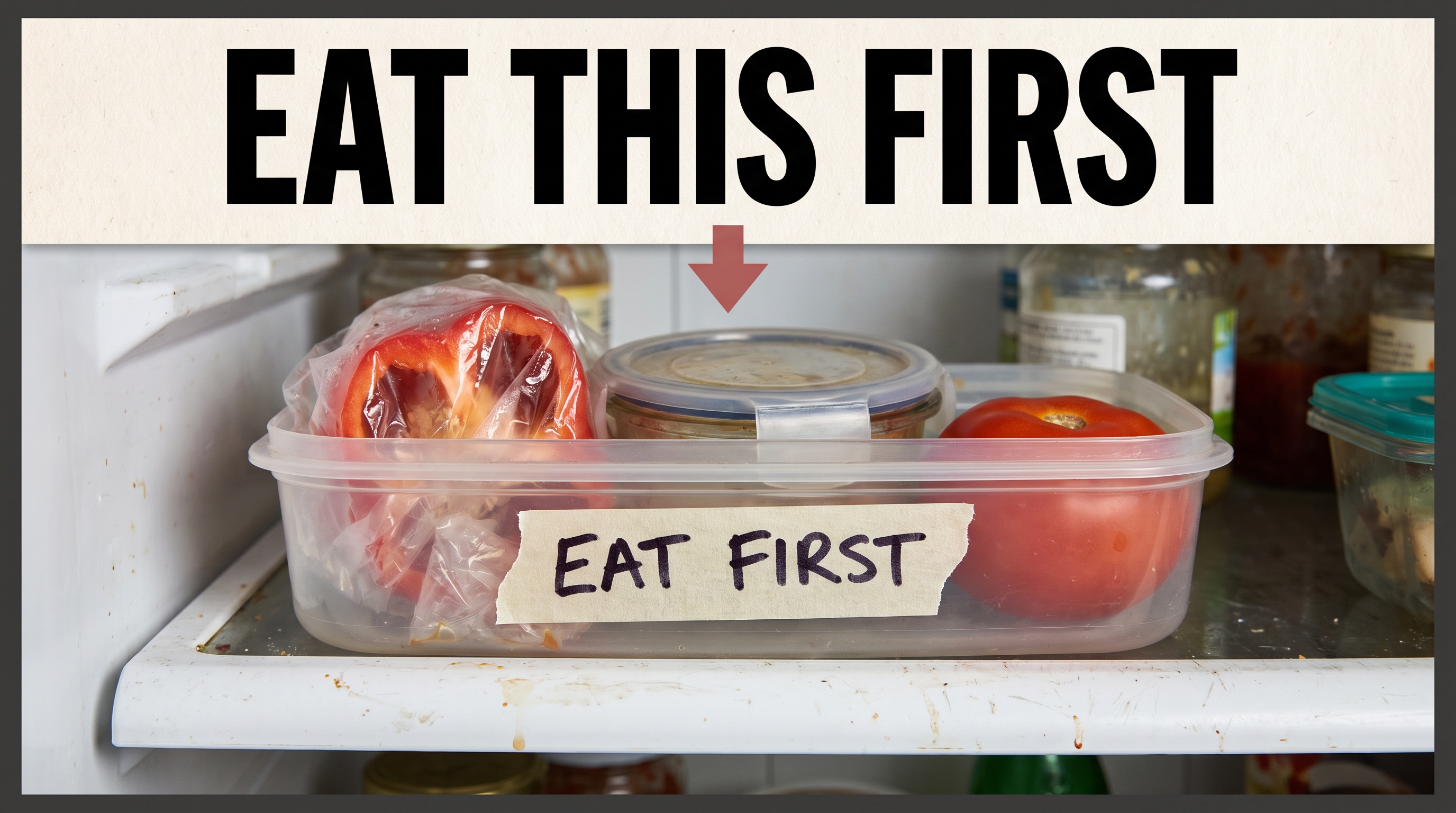
Make a small EAT FIRST spot in the fridge for food that is still safe but won’t keep long. Keep raw meat separate.
Put dated leftovers and produce there. Choose your next meal from that spot before opening something new.
5. Shop for the night you’re too tired to cook.
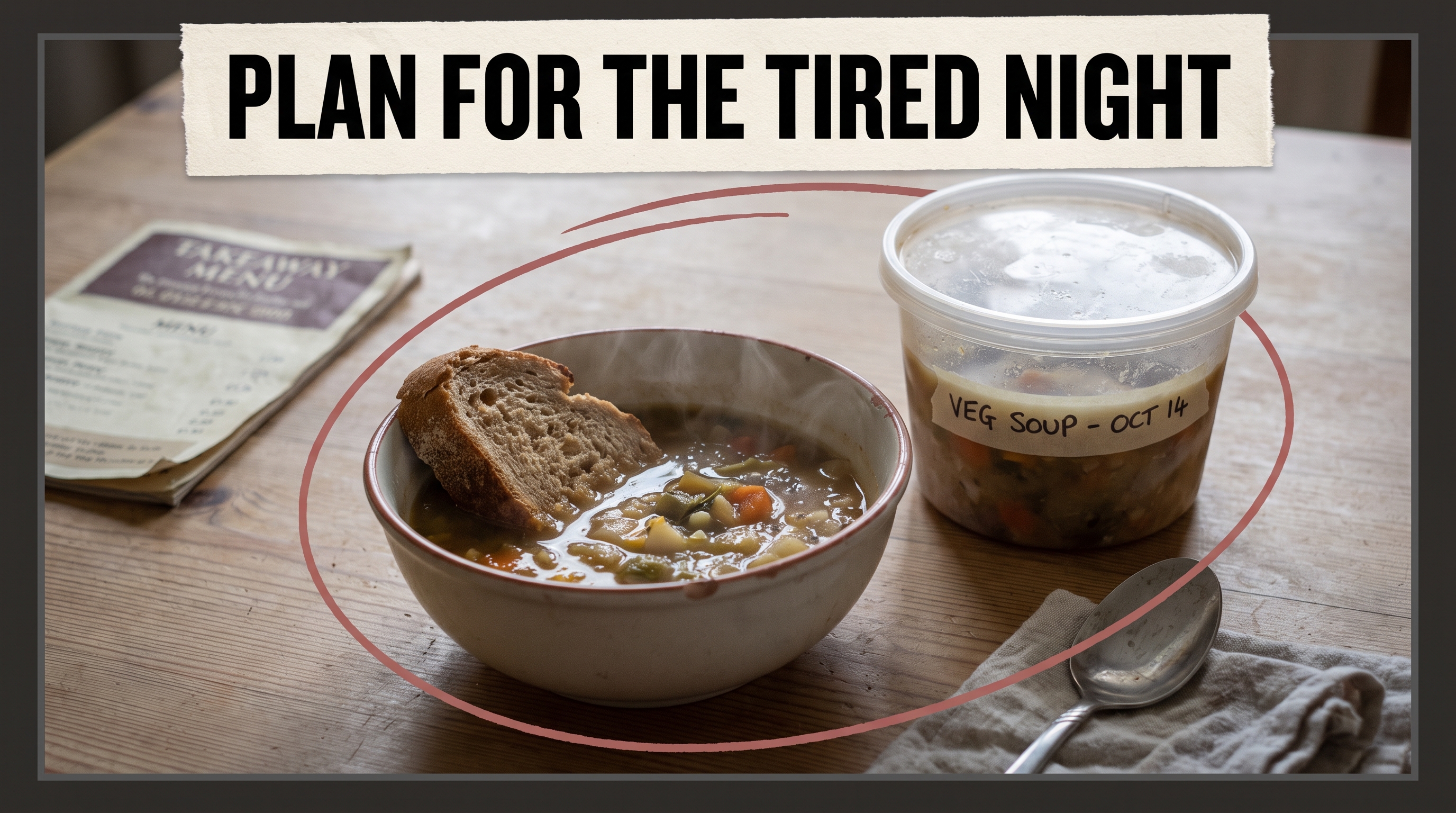
Keep one easy meal you like ready to go: frozen soup, eggs and toast, or a portion of pasta sauce.
Choose it before the tired night happens. A meal you’ll actually make can keep you from paying for takeout.
6. Watch the ‘just one thing’ trip.
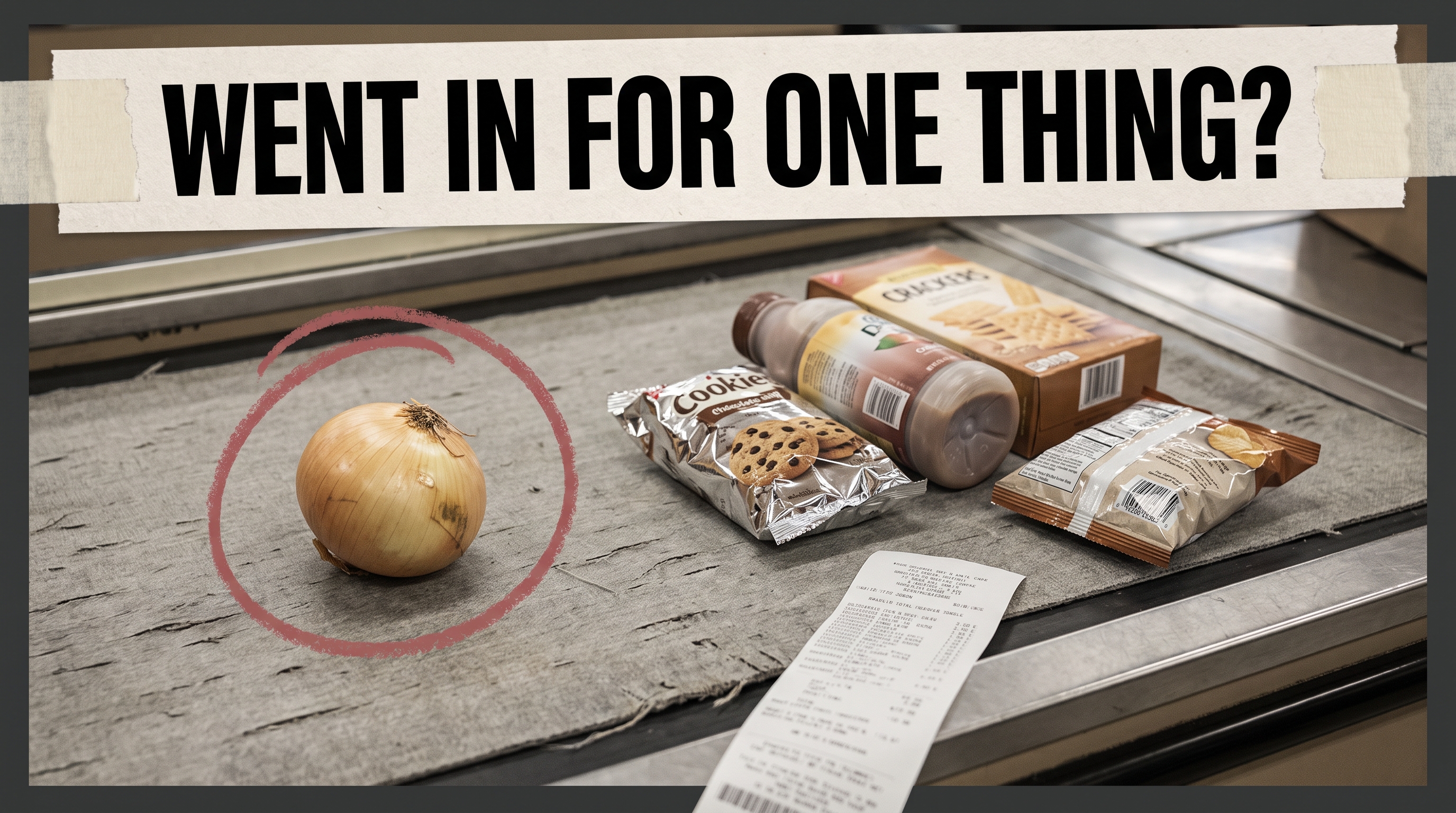
A missing onion gets you into the store. A basket of extras comes home.
First, check whether you can swap an ingredient or use what you have. If the trip is needed, write down exactly what you’re buying.
Count fuel, too, before driving across town for a deal.
7. Grow one thing you keep buying.
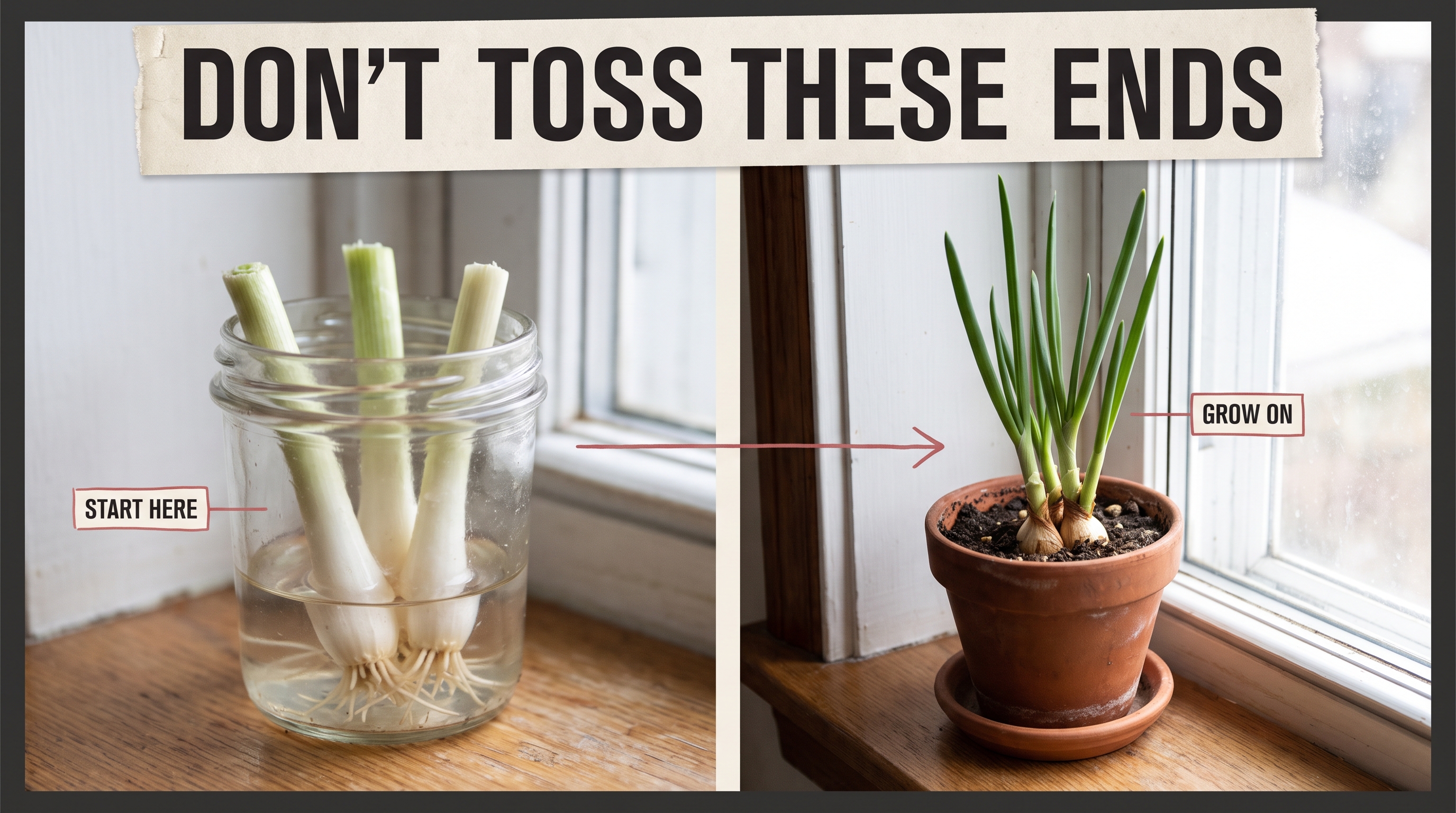
Buy green onions already? Use the tops in a meal. Save the healthy white ends with roots attached.
Stand them in a clean cup with water covering just the roots. Set it in a warm, sunny spot. Change the water weekly, or sooner if cloudy. New shoots can grow from those ends.
When shoots reach 4–5 inches, move the rooted ends into potting mix in a pot with drainage. Add a plant light if the window is dim.
Cold outside? Start indoors in a spot with enough light. Eat from the bunch you bought today. Grow a little more for later.
The first six tips help you get more from a grocery trip. The seventh gives you another place to get a little food.
That matters when you feel as if the only choice is to keep paying—or keep putting things back.
You don’t have to grow every meal. Start with one food you use often. Get that working. Then add another.
What if cutting back wasn’t your only option?
You can only put so many things back before dinner stops feeling like dinner.
Give yourself another option: a little food you can pick at home.
No yard? Start with a container. Cold outside? Use an indoor spot with the right light.
The picture-led plans show what to grow, how to set it up, and which foods you can pick from while they keep growing.
Start with a food you already buy. See what it needs. Then get your first setup started today.
Sam McCoy
4 Foot Farm Blueprint
Know someone who goes in for one thing and comes out with a full bag? Send them this article. Pick one tip to try on your next grocery trip.
Already own the Blueprint? Keep your growing checks and notes close at hand with the printed Field Guide. See the printed Field Guide →