
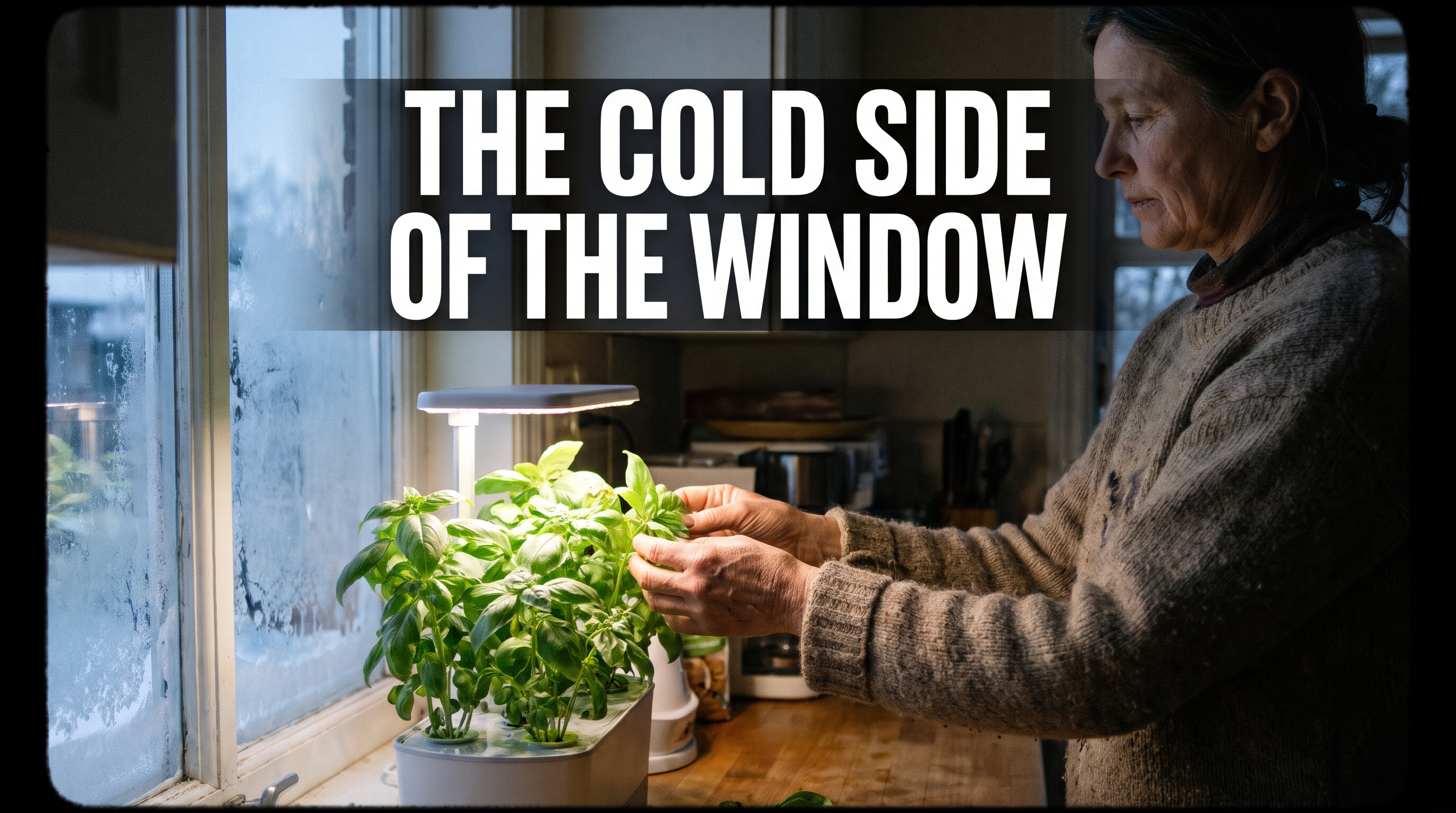
You picked the bright window. Your basil finally has a place. Then a cold night arrives, and its leaves are resting against the glass.
The room feels fine to you. That does not tell you what the leaf is touching.
FROM 4 FOOT FARM
Could one small growing space change your next grocery trip?
Start with food you already use. The COMPLETE 4 Foot Farm Blueprint includes indoor options and picture-led steps, so you can choose a setup that fits your space. See the Modern Victory Garden offer and start with one manageable project.
| TAP Here for the COMPLETE Blueprint → |
Tonight’s Install
One useful change for the home you already have. Print the worksheet below and add it to your Household Resilience Network binder.
ACTION BRIEF
Time: 10 minutes
Do: Move one pot clear of cold glass without taking away its light.
Win: no leaves touch the pane, and the plant still has a suitable light source.
What’s happening now?
This is Winter Weather Preparedness Week in Missouri, November 2–6. It is a useful cue to check the small growing space inside your own home, too. Mississippi State Extension warns against letting indoor plants touch window glass when outdoor temperatures freeze.
Check your local forecast; this is not a claim that every town will freeze tonight.
What did an American greenhouse actually protect?
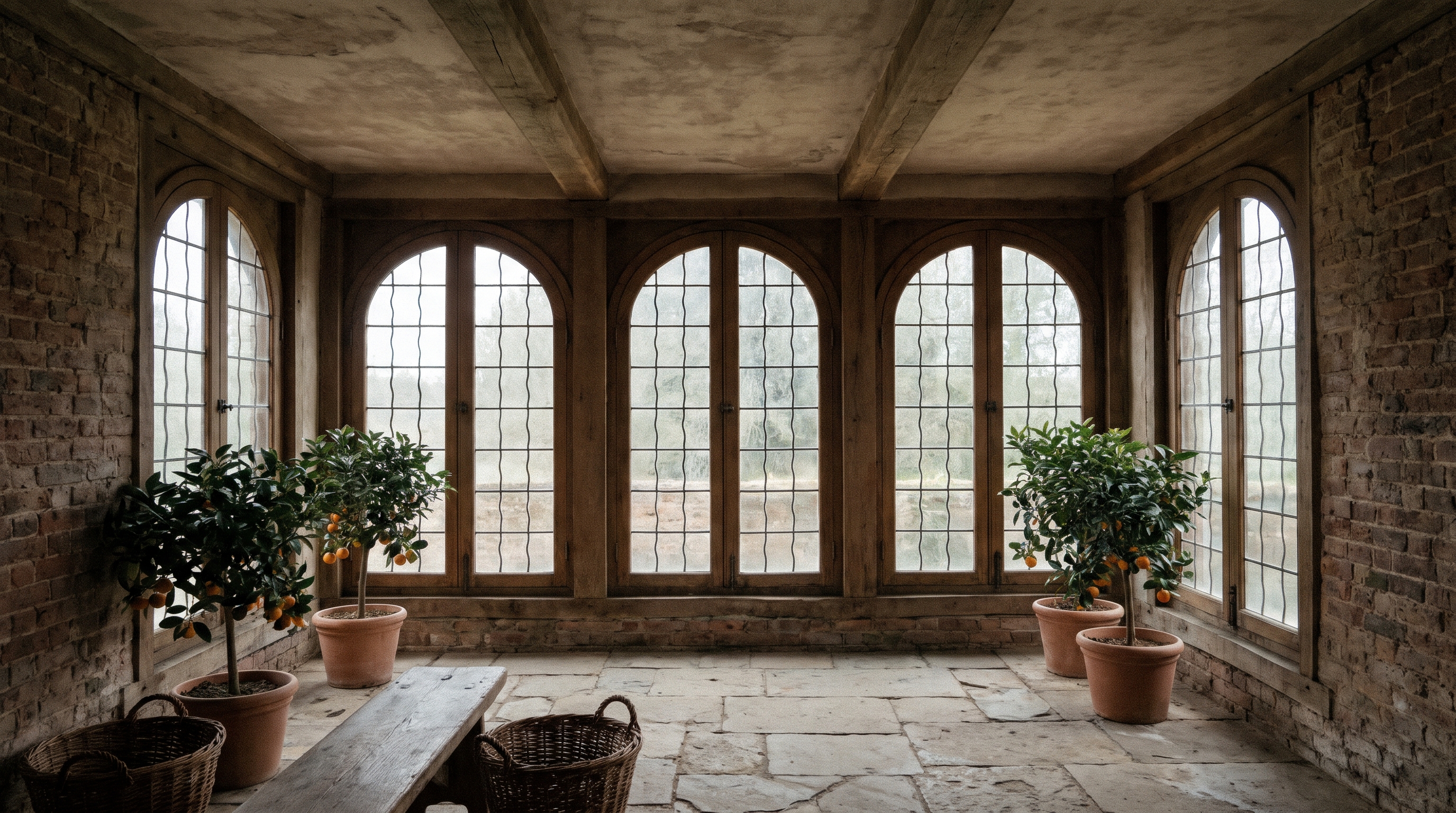
Illustrative historical reconstruction.
In 1804, Thomas Jefferson ordered window sashes for a greenhouse built into Monticello. It was not a giant building standing in a field. It became a glass-enclosed space at the south end of the house, called the South Piazza.
By 1809, a visitor described the finished room. Glass divided it from the other rooms. Plants could be seen through the doors and partitions.
Earlier letters had discussed little orange trees intended for the space.
There is a useful detail here: the shelter was part of the growing plan. A plant was not simply put beside a wall and left to manage the season. The structure changed the place where it lived.
Monticello was a plantation built and maintained through enslaved labor. Its resources and labor system were nothing like an ordinary kitchen garden. We should not turn that history into a cheerful claim that everyone had the same choices.
The narrow lesson concerns the plant’s surroundings. A protected space can make a different growing condition possible. But the word indoors does not tell the whole story.
A sunny spot, a drafty doorway, and the glass itself can expose plants to different conditions.
For your kitchen, the next step is far smaller than building a greenhouse. Look at the exact spot where a leaf rests. Keep the bright location useful, while removing contact with freezing glass.
That is the part worth carrying forward: change one condition the plant actually experiences. Do not judge the whole growing space only by how comfortable the middle of the room feels to you.
How did Roman gardeners move the growing season?
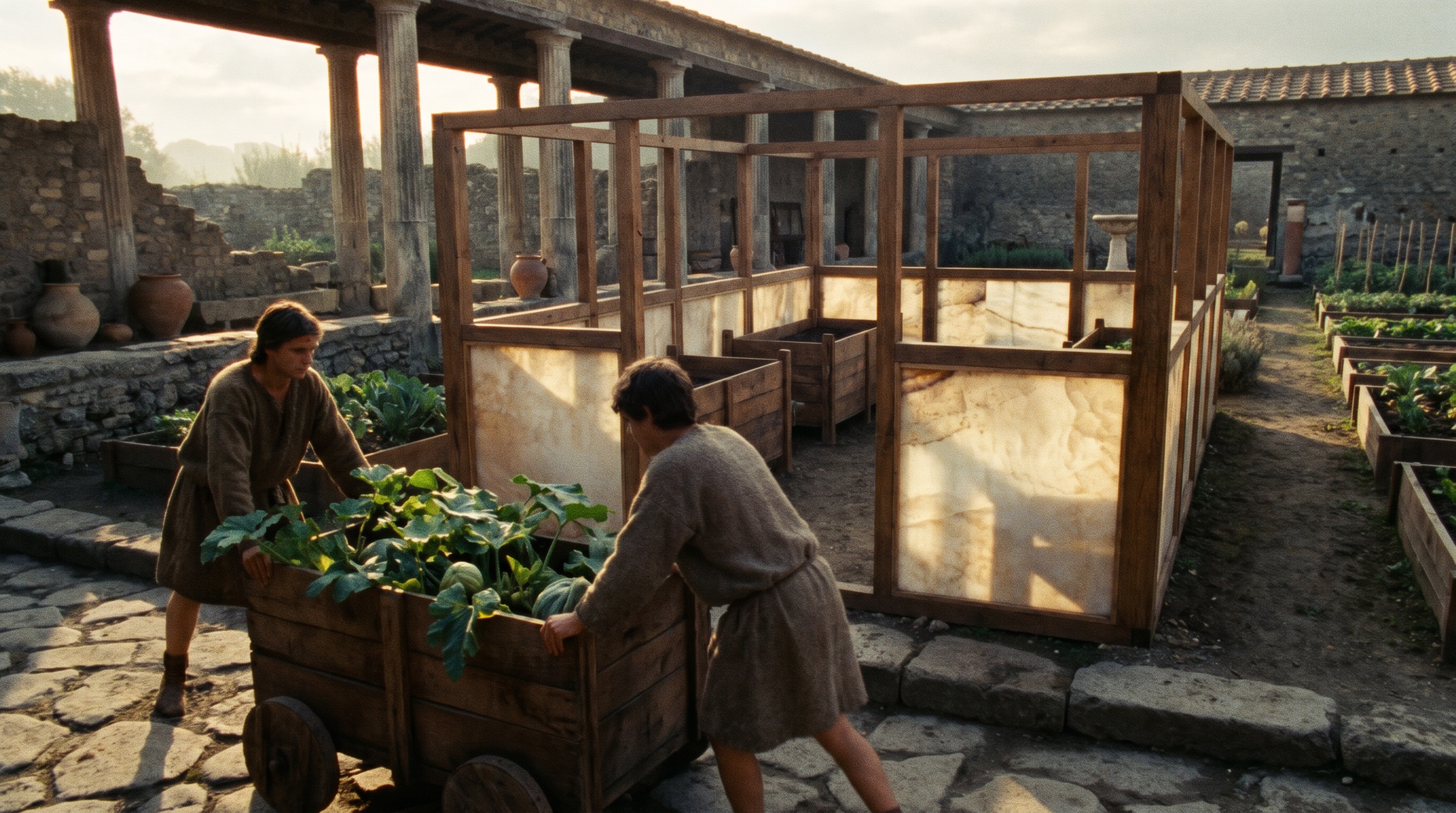
Illustrative historical reconstruction.
Long before electric plant lights, Roman writers described a way to give an emperor fresh produce beyond its usual season. In the first century AD, Columella and Pliny wrote about protected growing beds associated with Tiberius.
The beds could be moved. In favorable weather, plants received outdoor light. In colder conditions, they went under cover.
Transparent stone panels helped admit light while providing shelter. These structures were called specularia.
A modern horticultural review traces those accounts to the beginnings of controlled growing spaces. The familiar story is often told as an emperor demanding cucumbers. Scholars debate the exact crop behind the ancient plant names, so we do not need that disputed detail to learn from the method.
What matters is the change in conditions. The gardeners worked with light and shelter together. Cover alone did not replace light.
Being out in the sun did not replace protection when conditions changed.
This was an expensive arrangement serving an imperial household. It was not a cheap, universal Roman food system. Nor does the account promise that every crop will flourish on a modern windowsill.
Our smaller comparison is about placement. A pot can be moved without rebuilding the home around it. The useful place in the afternoon may need a small adjustment on a freezing night.
Today, you can look at the light you have, the nearby glass, and any heating vent. Make a careful change that protects the leaves without putting them in darkness.
The old growing beds could roll. Your small pot can move a few inches. The principle is simple: the growing space should serve the plant as the weather changes.
THE PATTERN TO KEEP
Across BOTH examples, a protected growing space worked by managing the conditions around the plant—not merely by calling it indoors.
What can I do tonight?
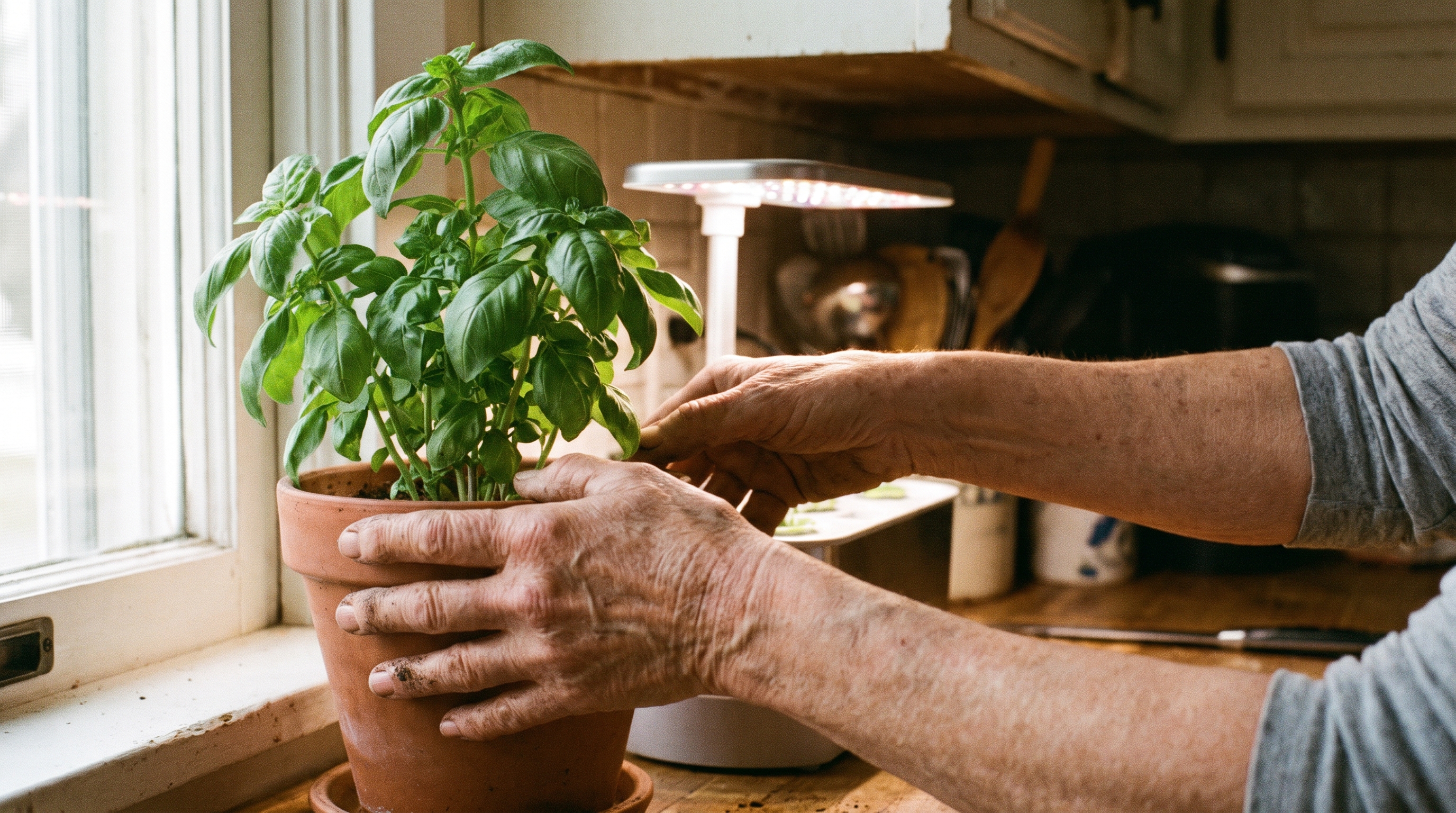
Look at one edible plant before dark. Move any leaf touching the window clear of the glass. Keep the pot in suitable light; if you use a plant light, follow its placement directions.
Keep foliage away from hot vents as well. Check the spot again on the next cold evening. Do not add water just because you moved the pot.
HOUSEHOLD RESILIENCE NETWORK · BINDER WORKSHEET
Give Your Herbs Room From the Glass
Date: __________________
Plant and window
Leaves clear of glass?
Light still available?
Next cold-night check
Status Check
Win: no leaves touch the pane, and the plant still has a suitable light source.
The takeaway
Move one pot clear of cold glass without taking away its light. Keep the change small enough to finish, and leave a record you can check again.
Stay steady,
Sam McCoy
4 Foot Farm Blueprint
Start small. Grow something you eat.
P.S. Which plant is closest to your coldest window? Hit reply with the plant and the room. Forward this to someone bringing a garden indoors.
One more useful read: How to keep stored potatoes useful →
P.P.S. · PRINTED FIELD GUIDE
Prefer the growing steps on paper beside you? The spiral-bound Field Guide lays flat while you work.
| TAP Here for the Printed Field Guide → |
NWS: this week’s winter preparation
Mississippi State: indoor plant care
Monticello: greenhouse records
HortScience: ancient protected growing
Images are illustrative reconstructions, not archival photographs.