
Your Daily Install connects what’s happening now with a useful pattern from the past—and one simple step you can take today to make your household more resilient.
Print the worksheet below, fill it in, and add it to your Household Resilience Network binder.
What’s happening now?
The room looks bright. The lettuce keeps stretching toward the glass. What is it missing?
Today, November 1, most U.S. clocks moved back. The clock did not take sunlight away; the season has already been shortening our days. For food growing indoors, the useful question is how much light reaches the leaves—not how bright the room feels.
A small plant light can give one food its own growing spot. You can start with a corner, not a greenhouse.
Has this happened before?
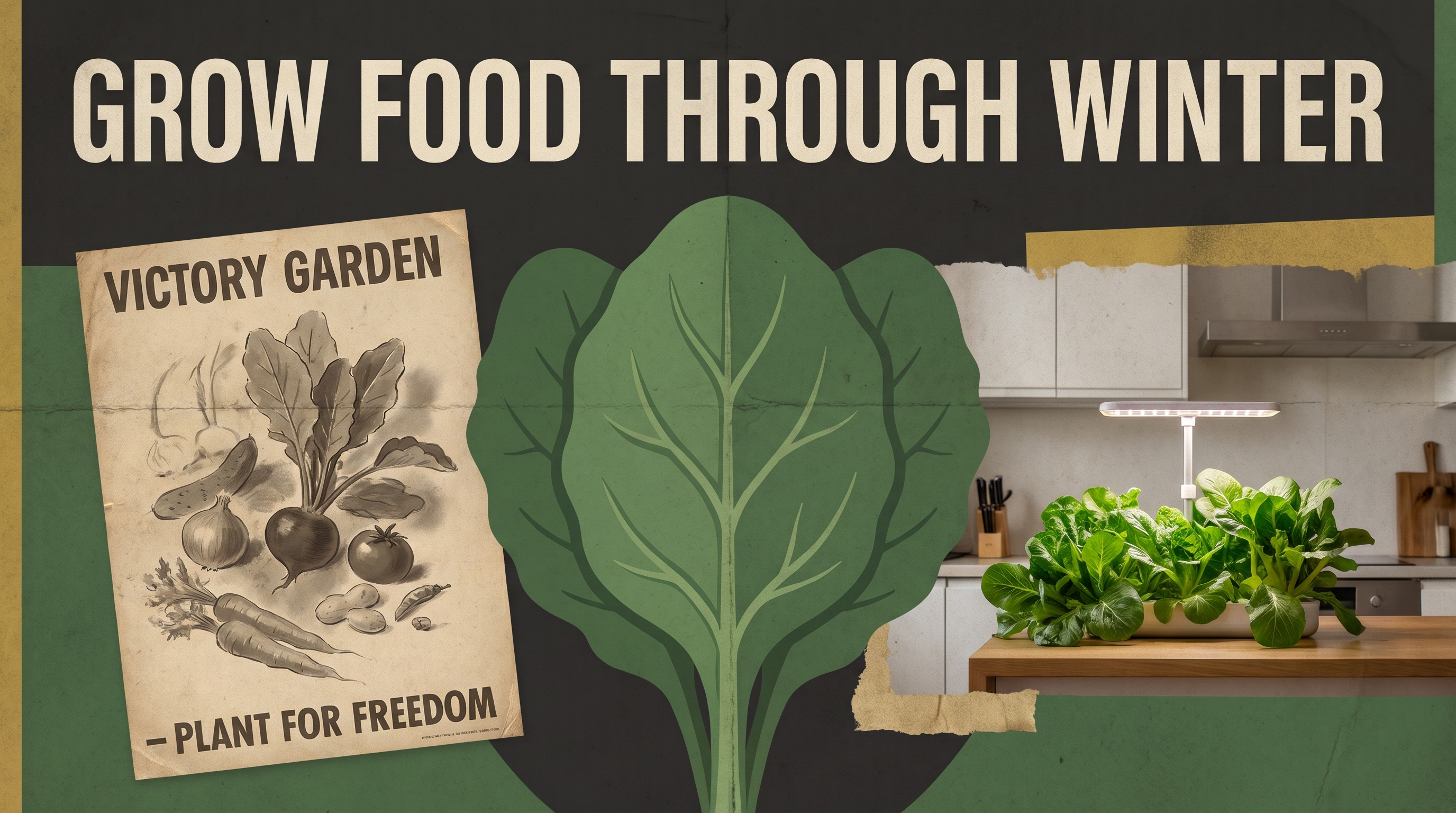
In 1943, Americans turned spare ground into Victory Gardens. Yards, school grounds and city plots became places to grow ingredients for dinner. Posters made the effort look grand. The daily work was more ordinary: plant, tend, pick and use the food.
The National Park Service describes a program built around both food and practical teaching. Families still needed to match crops to their space and season. A packet of seeds alone could not do the work.
The lesson was not that everyone needed a farm. Many small growing places could add food close to the people who would eat it.
What happened next?
Victory Gardens added a major fresh-food supply during the war. Today’s conditions are different. We can borrow the useful part without copying a whole wartime garden.
Give one food the conditions it needs, then build from that win. Indoors, that can mean putting a simple light over a small planter instead of waiting for the perfect sunny yard.
Put the phone down. Keep the steps open.
Wet hands. A locked screen. You wanted growing steps, not another scroll. Keep the spiral-bound Field Guide open beside the pot.
TAP Here to See the Printed Field Guide →What can I do?
Take 15 minutes to choose one safe growing spot. Pick a place you can reach each day, away from heat vents and out of the walking path. Start with a food you use, such as leaf lettuce.
Check the plant and light instructions together. A small LED grow light with a timer is one simple option. Place it at the maker’s recommended distance; a ceiling or sink light is usually too far away. Keep plugs dry and cords out of the way.
Use a pot with drainage and a tray. Write down the light schedule and a daily check time. A healthy starter plant skips the seed stage. Keep tending it as it grows; today’s win is a ready place to begin.
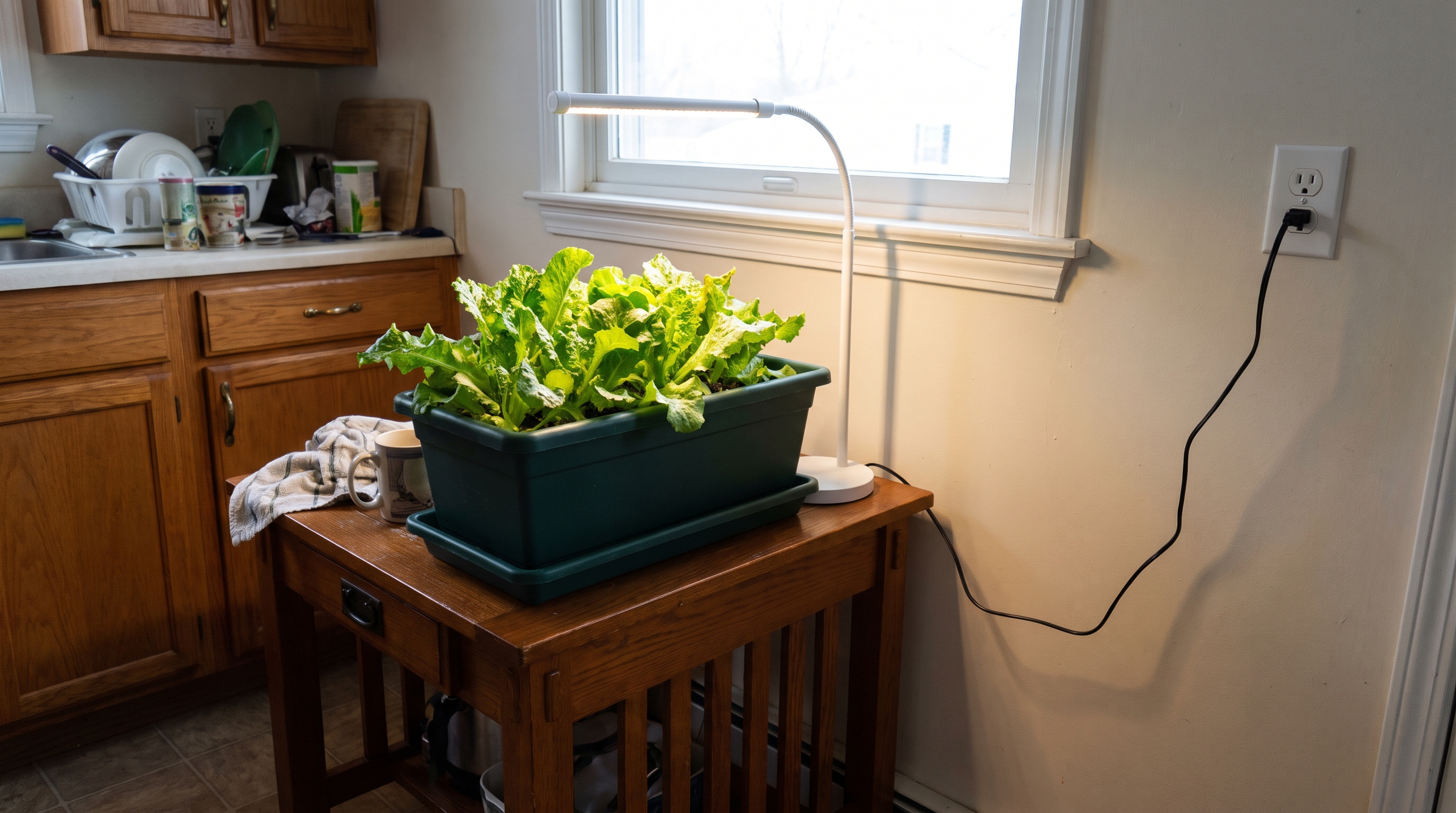
Illustrative household example. Fill in your own details below.
My One-Food Winter Spot
Date: __________
File under: Food Growing
Pick the food and place
Food I actually use:
Safe spot / tray ready:
Make it repeatable
Light distance / schedule from instructions:
Daily check time:
☐ Cord dry and clear of the walking path.
Today’s win: One small food-growing spot has a light plan, drainage and a daily check.
Your grocery store does not have to grow every leaf.
Another bag of greens. Half used. Another bag on next week’s list.
Bring a small part of that food supply home. The COMPLETE Blueprint shows the steps in pictures, with indoor options and simple plant-light setups for colder months.
Start with a food you already eat. Pick what fits your space. Build your modern Victory Garden one useful step at a time.
Your VIP link unlocks over 80% off the COMPLETE digital Blueprint plus both bonuses. Take a look at the simple starting plan.
| TAP Here for Your Modern Victory Garden → |
Stay steady,
Sam McCoy
4 Foot Farm Blueprint
P.S. Which would you rather pick at home: lettuce, herbs or green onions? Hit reply with one. Forward this to a friend who thinks growing food has to stop for winter.
P.P.S. Already have the digital Blueprint? Keep the growing steps open beside you. TAP Here for the Printed Field Guide →