
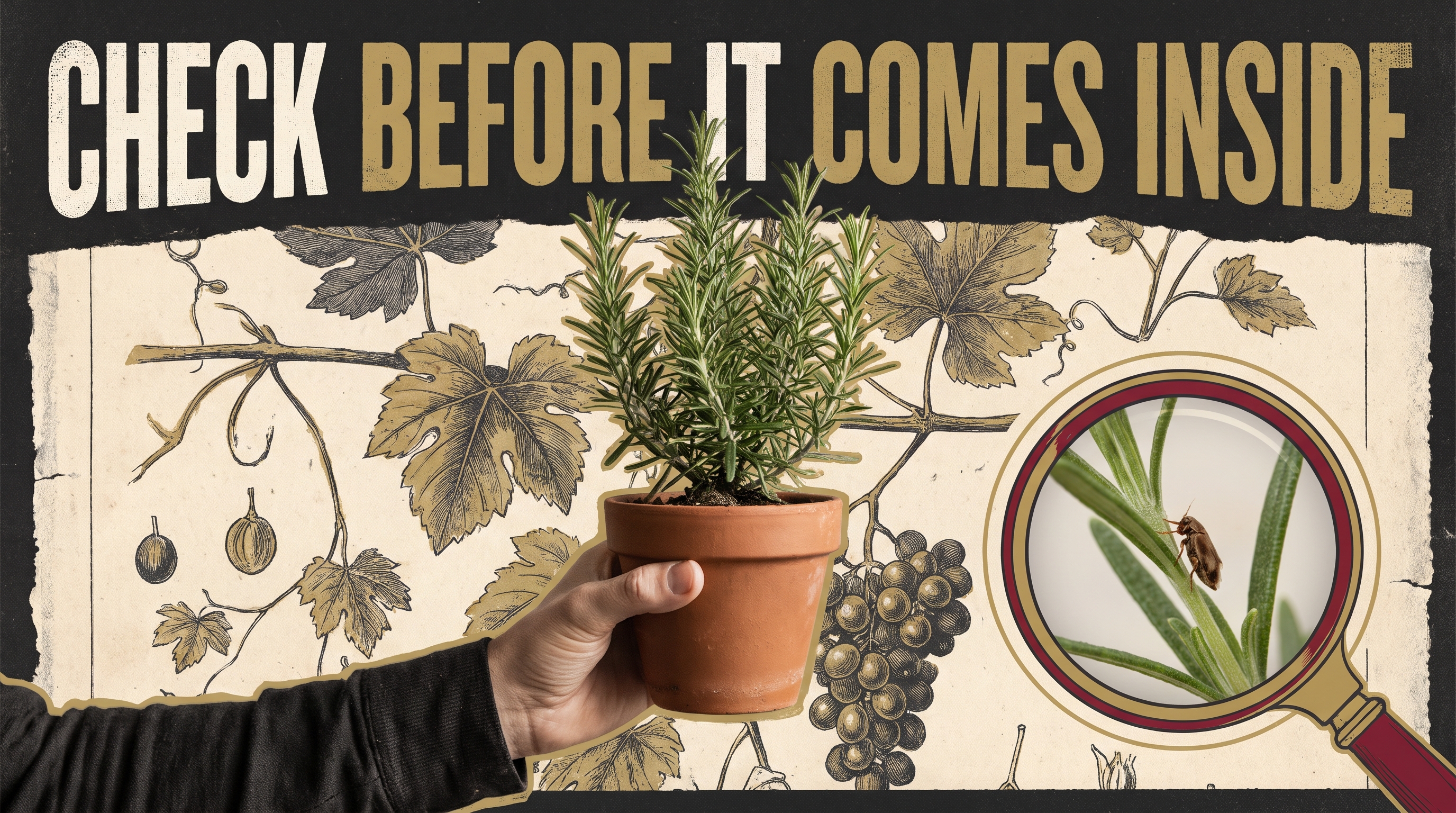
Your Daily Install connects what’s happening now with a useful pattern from the past—and one simple step you can take today to make your household more resilient.
Print the action worksheet below, fill it in, and add it to your Household Resilience Network binder.
What’s happening now?
You saved a good plant from the cold. A week later, little bugs show up on the food growing beside it. The plant was not the only thing you brought inside.
As late-October nights turn colder, moving pots indoors is back on the fall checklist. University plant experts recommend checking for pests first and keeping incoming plants apart for a couple of weeks. A plant can look fine from across the room and still carry a problem.
Give one incoming plant its own spot before it joins the others. This is about keeping a small food patch healthy—not making indoor growing harder.
Has this happened before?
In the 1860s, grape growers in France began losing vines. Leaves drooped. Roots failed. The damage spread through a crop people depended on for their living.
A tiny insect called phylloxera had arrived from North America. It fed on roots that had little defense against it. Moving useful plants had also moved something growers did not want.
American entomologist Charles Valentine Riley helped point toward an answer. Native American grape roots could resist the pest. Growers attached the fruiting parts of European vines to those tougher roots.
The trouble was small enough to miss on a plant. The cost became large when it spread through many plants.
What happened next?
Grafting onto resistant roots helped restore vineyards. It was a specific answer to a specific pest—not a reason to give up growing grapes.
The pattern: check what travels with the thing you want to keep. A close look and a separate spot give you a chance to catch a small pest before it reaches the rest of your plants.
Dinner’s coming. Skip another takeout bill.
You are tired. The fridge has bits and pieces. Before you pay for takeout again, look at the copycat meals and use-it-up recipes in the Household Playbook.
Tap Here to Look Inside the Household Playbook →What can I do?
Take 10 minutes with one pot you plan to bring inside. Look under leaves, along stems and around the pot rim. Check for sticky patches, webbing, small bumps or moving insects. A phone camera can help you look closer.
Keep the incoming plant away from your other plants for about two weeks and check it again. Give it suitable light; a simple plant light is an option when window light is weak.
If you find a pest, identify it before treating. For food plants, any product must be labeled for that edible plant, pest and indoor use. Ask a local plant expert when unsure. If nothing is moving inside today, check one plant you already own.
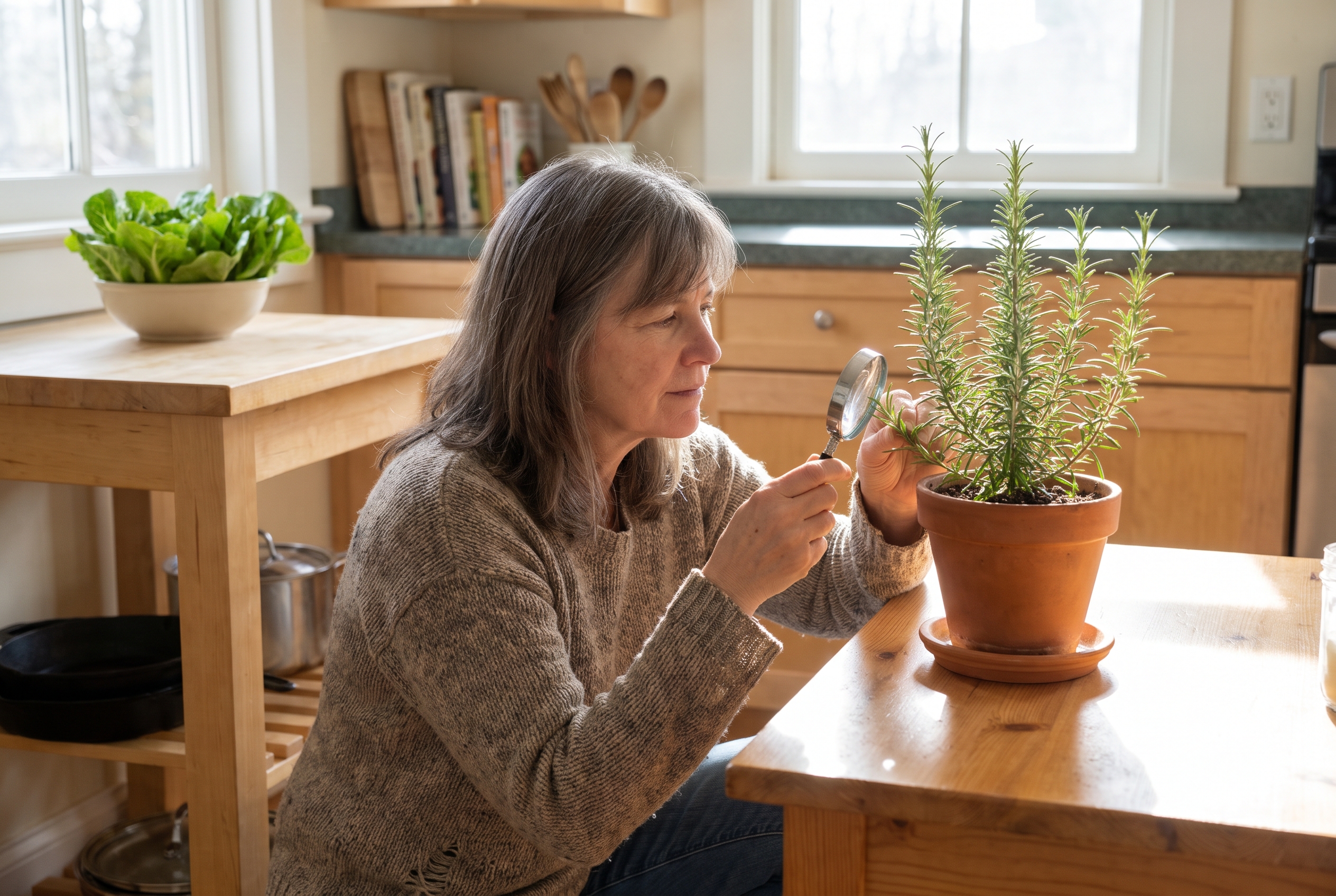
Illustrative household example. Use the worksheet for your own details.
My Incoming-Plant Check
Date: __________ File under: Food Growing
Look before moving
Plant checked:
Signs found: ☐ None ☐ Sticky spots ☐ Webs ☐ Insects
Keep the good start healthy
Separate lighted spot:
Next check / date:
☐ No treatment used without checking the label.
Today’s win: One plant has been checked and given a place where a missed pest is less likely to spread.
Grow something you keep buying.
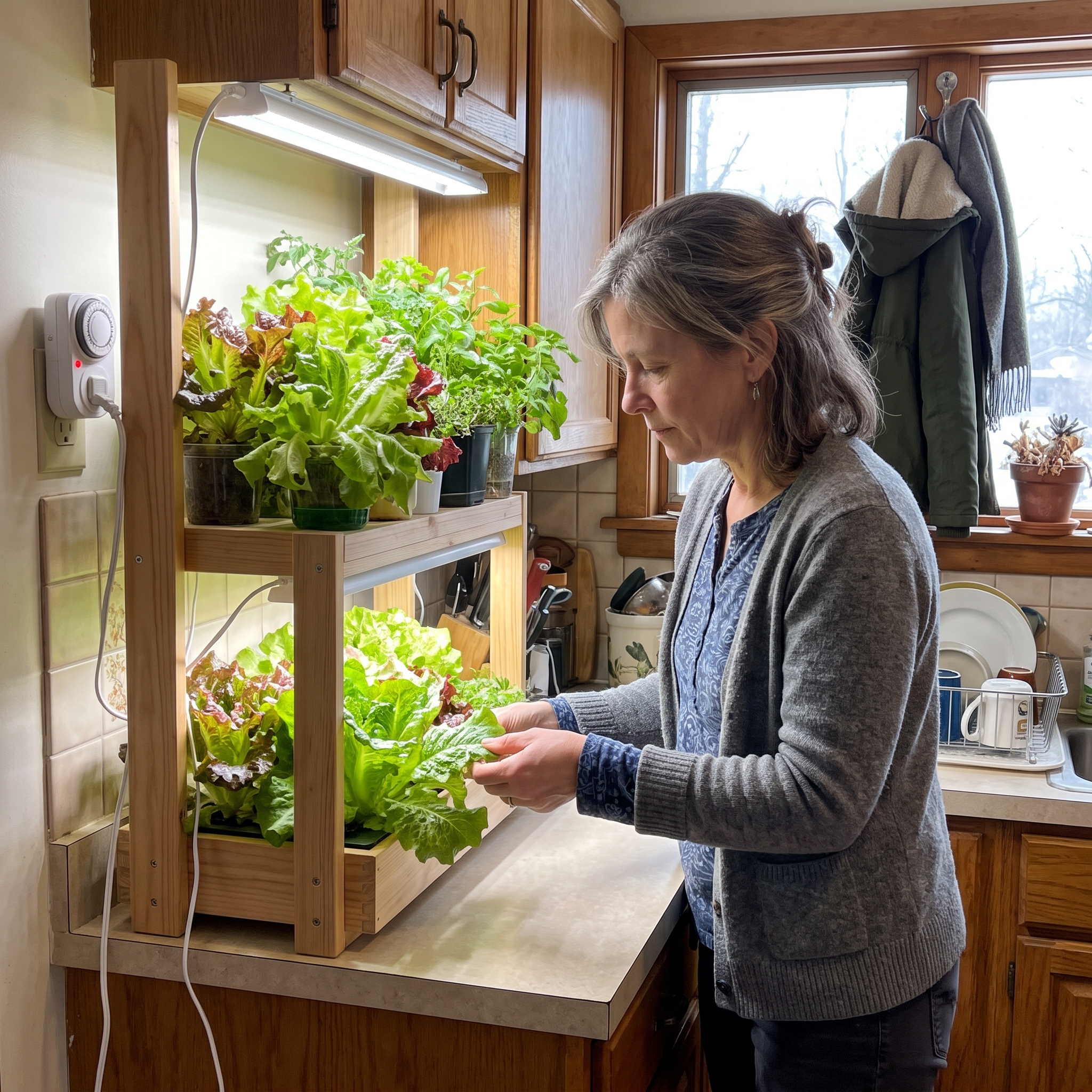
Another bag of greens. Another bunch of herbs. Then you are back buying them again.
Start with one food you already eat. The COMPLETE Blueprint shows the steps in pictures, with small-space and indoor options. A cold month does not have to put the idea on hold.
See what you could grow in the space you already have.
| Tap Here to See the COMPLETE Blueprint → |
Stay steady,
Sam McCoy
4 Foot Farm Blueprint
P.S. What food plant would you most like to keep growing indoors? Hit reply with one. Forward this to someone bringing pots inside this fall.
P.P.S. Already have the COMPLETE Blueprint? Put the steps beside your pots instead of hunting through your phone. The printed, spiral-bound Field Guide lies flat while you work. Tap Here to See the Printed Field Guide →