
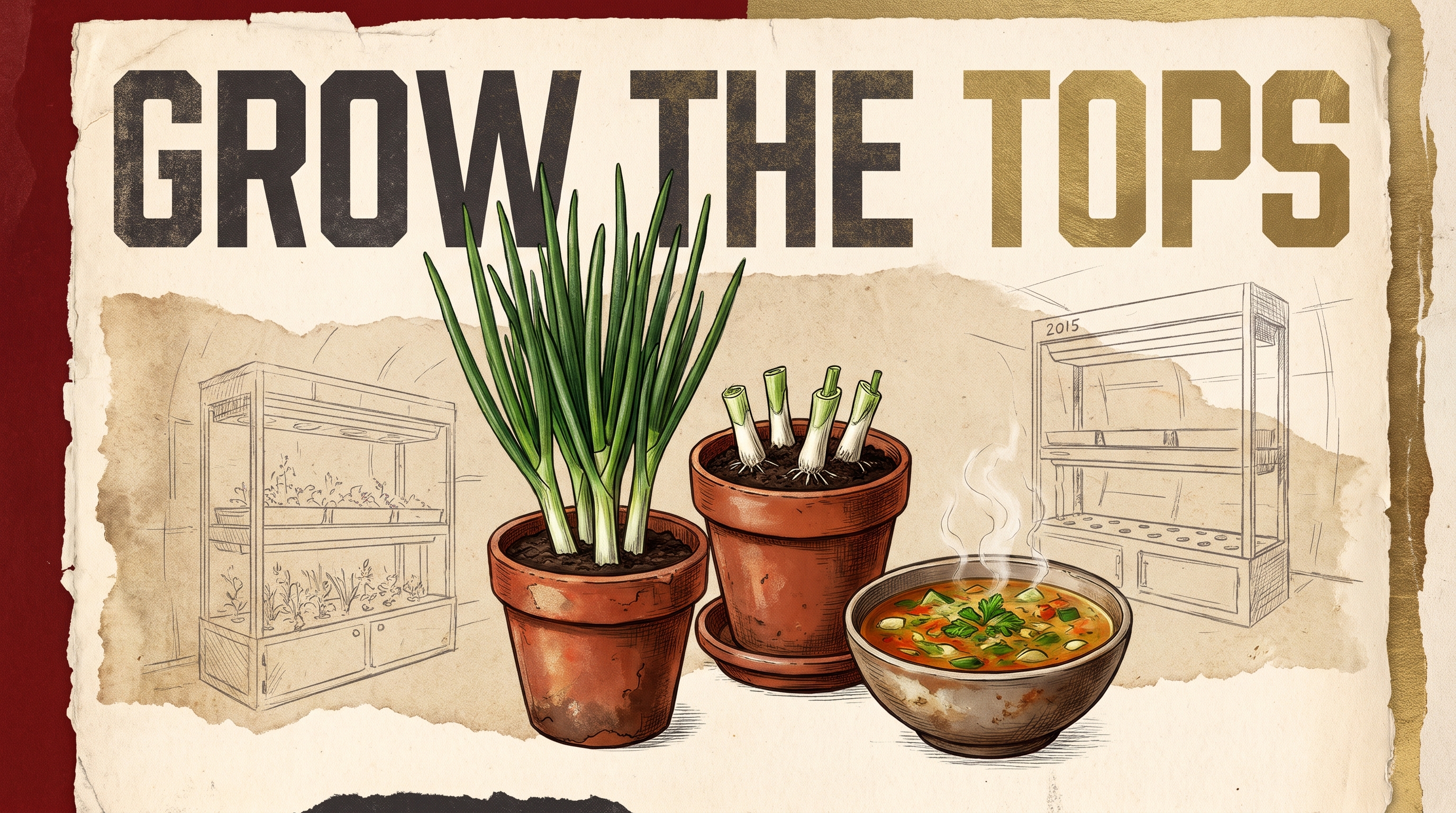
Your Daily Install connects what’s happening now with a useful pattern from the past—and one simple step you can take today to make your household more resilient.
Print the action worksheet below, fill it in, and add it to your Household Resilience Network binder.
What’s happening now?
You chop the green onions. The white ends go into the trash. Dinner moves on.
But if those ends still have healthy roots, you may have just thrown away your next small start. In its October 23 update, USDA forecast that fresh vegetable prices would average 5.8% higher in 2026 than in 2025. That is a full-year average—not another 5.8% jump before December.
Today’s small move: keep a few rooted ends and give them a place to grow. No seed tray. No big bed. Just a little more use from food you already bought.
Has this happened before?
On August 10, 2015, three astronauts aboard the International Space Station gathered around a very small harvest: red romaine lettuce grown in NASA’s Veggie plant system.
Most of their meals still came from Earth. This was fresh food grown close to where they would eat it, in a tight space with controlled light.
They shared the leaves. One small crop had added something their stored meals could not: food they had just picked.
What happened next?
NASA kept studying how plants could add fresh food to long space missions. The lettuce did not replace the supply ship. It showed that a small growing space could add a useful fresh portion.
That is the pattern to borrow: add one food you will actually use. Your kitchen is no space station. But you can start with one pot instead of trying to replace the whole grocery store.
Put the book beside the pot.
Wet hands. A phone that keeps locking. The printed, spiral-bound Field Guide stays open while you work. Want the growing steps where you can actually use them?
Tap Here to See the Printed Field Guide →What can I do?
Take 10 minutes after making a meal with green onions. Keep 2–3 sound white ends, each about 2 inches long, with roots attached. Plant roots down in fresh potting mix in a small pot with drainage holes. Leave the cut tops above the mix.
Water and let the extra drain. Give the pot a bright window spot. If daylight is weak, a simple plant light used as directed gives you another option. Keep the mix lightly moist, not soggy.
Wait for healthy new green growth before taking a light clipping. Leave some green to keep growing. This is a small crop of tops—not an endless supply from a glass of plain water. Keep onions away from pets.
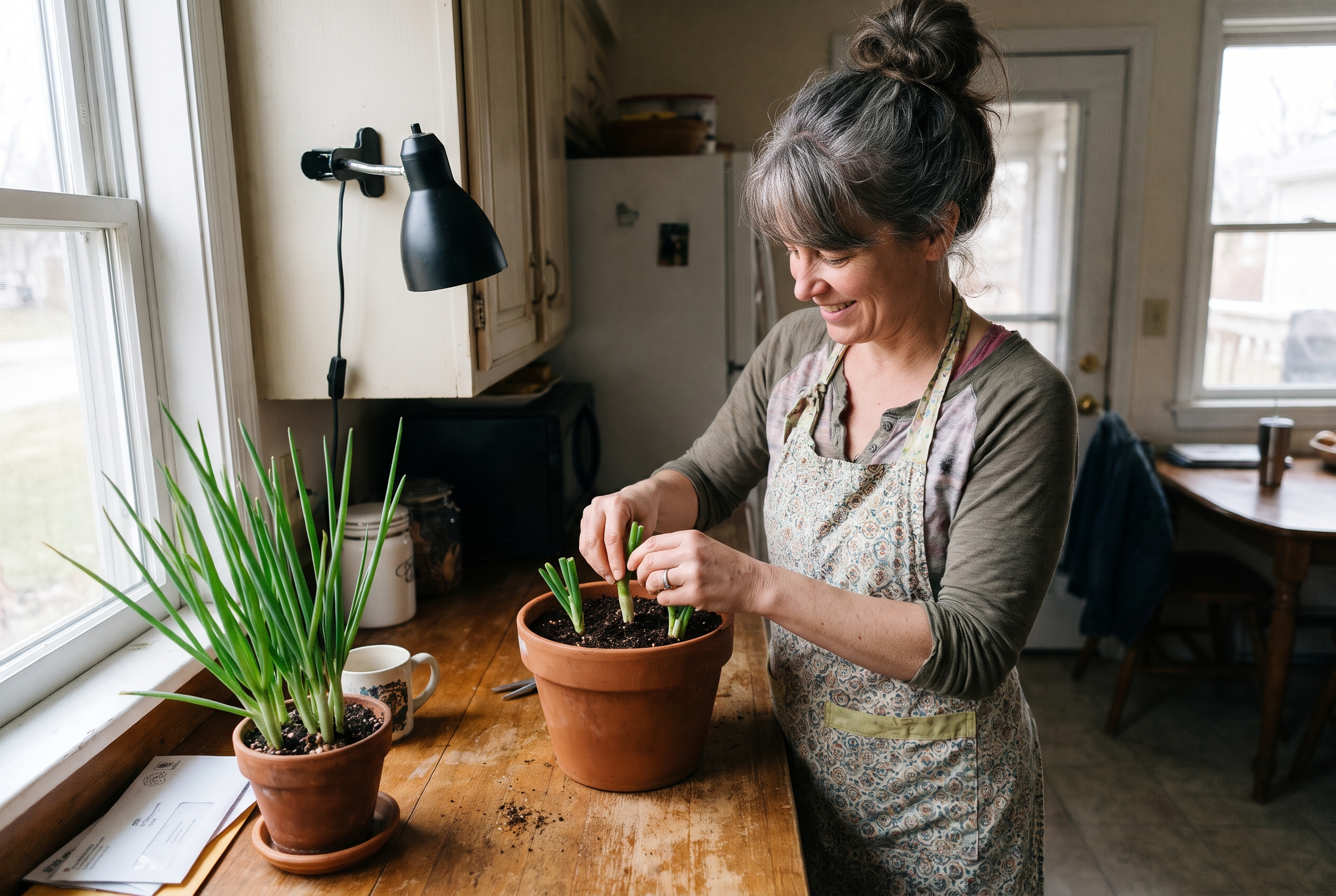
Illustrative household example. Use the worksheet for your own details.
My Green-Onion Start
Date: __________ File under: Food Growing
Keep one small start
Rooted ends planted:
Pot and light location:
Give it a job
Meal I will add the tops to:
Next growth check:
☐ Drainage checked. ☐ Roots planted; cut tops exposed.
Today’s win: You have one small planted start and a meal in mind for it.
What if the next fresh handful came from home?
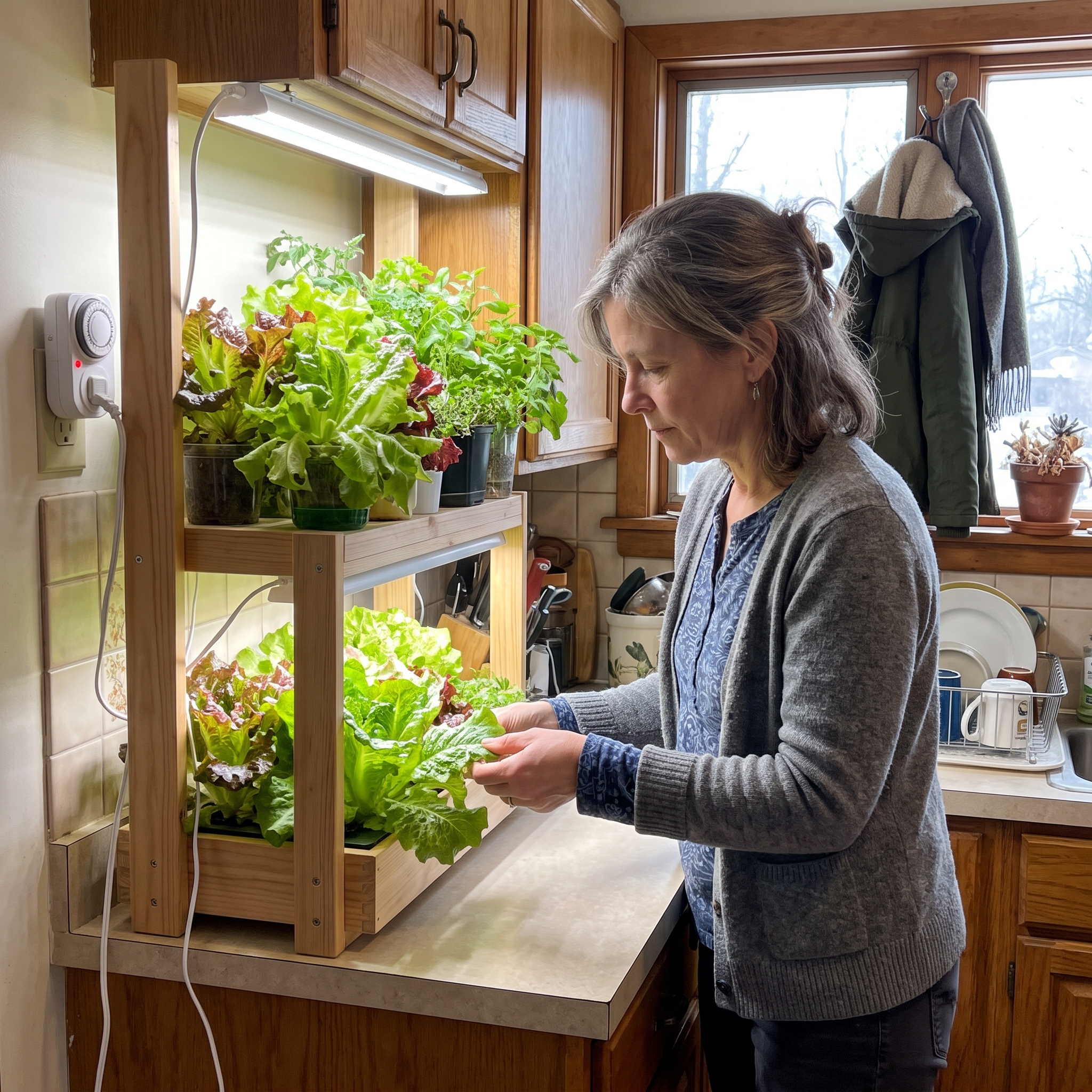
You do not want another expensive hobby. You want food you can pick and use.
The COMPLETE Blueprint shows how to start small, indoors or out. See the setup, choose a food you enjoy and follow the steps in pictures.
What could you grow in the space you already have? Take a look before another grocery run.
| Tap Here to See the COMPLETE Blueprint → |
Stay steady,
Sam McCoy
4 Foot Farm Blueprint
P.S. Which food do you keep buying just to use a little? Reply with one. Share this with someone who would enjoy a small indoor start.
P.P.S. Already have the COMPLETE Blueprint? Put the steps beside your pots instead of hunting through your phone. The printed, spiral-bound Field Guide lies flat while you work. Tap Here to See the Printed Field Guide →