
Your Daily Install connects what’s happening now with a useful pattern from the past—and one simple step you can take today to make your household more resilient.
Print the action worksheet below, fill it in, and add it to your Household Resilience Network binder.
What’s happening now?
You open a fresh bag of greens. A few meals later, you need another one. Growing your own can help—but one big planting can leave you with too much at once, then a gap.
Clocks go back this Sunday, November 1, in most of the U.S. The shorter days are a good cue to plan a small indoor food patch. A simple grow light can help when window light falls short.
Today’s idea: give your next batch a start before the first batch is finished.
Has this happened before?
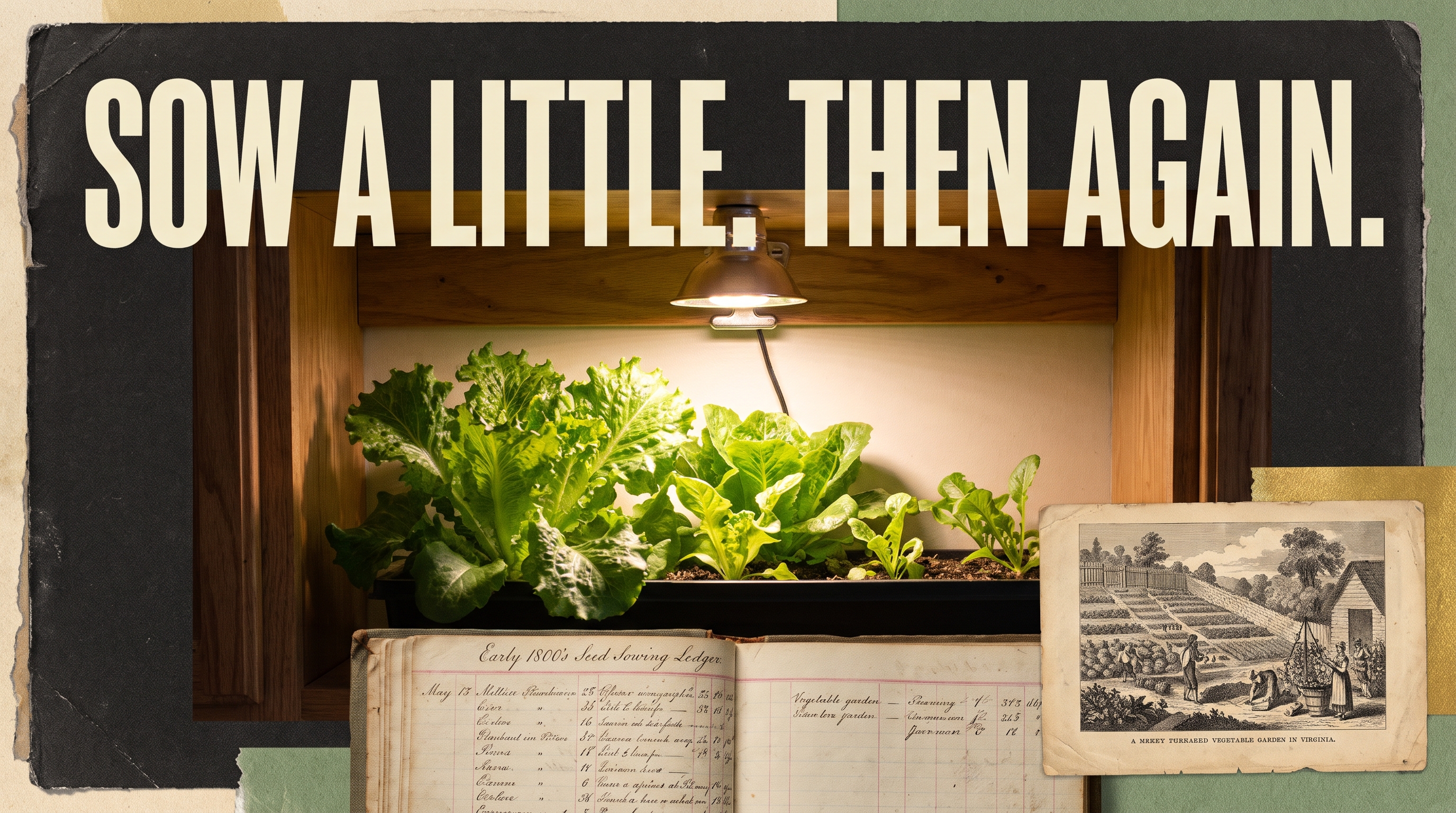
At Monticello in the early 1800s, fresh salad did not come from one spring planting. Garden records noted lettuce and radishes sown about every two weeks during the growing season.
Enslaved gardeners did the work that kept the plantation’s food growing. The records show a useful detail: the planting date was part of the food plan, not an afterthought.
What happened next?
Repeated sowings gave the garden crops at different ages. One batch could be growing while another was closer to picking.
The pattern: spread the starts to spread the chances for a harvest. Indoor plants grow at their own pace. Two weeks between sowings does not mean lettuce will be ready to eat in two weeks.
Everyone laughed. You missed the words.
You lean in. Ask them to repeat it. Why do grape seed and green tea show up together in this hearing-support blend?
Tap Here to See the Hearing-Support Blend →What can I do?
Take 10 minutes to set up a two-batch plan. Choose loose-leaf lettuce you already like to eat. Use a container with drainage and potting mix; follow the seed packet for depth and spacing.
Label the first batch A. Put a reminder about two weeks ahead to sow a small batch B. Adjust later sowings as you see how fast the plants grow in your home.
Pick a bright spot. If you use a grow light, follow its directions for distance and daily hours. Start with a small amount you can care for—no big setup needed.
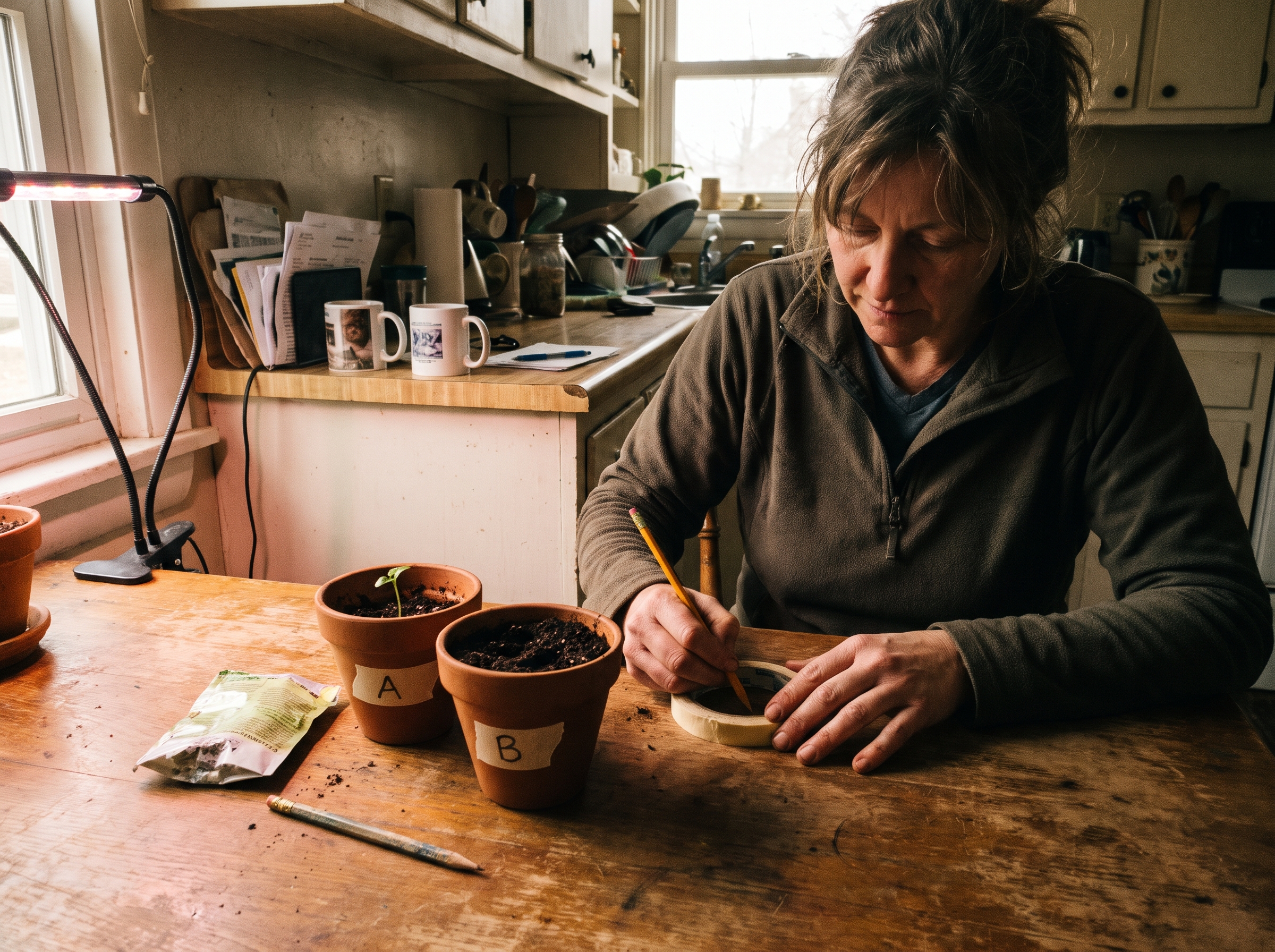
Illustrative household example. Use the worksheet for your own details.
My two-batch lettuce plan
Date: __________ File under: Food growing
1. One food, two starts
Lettuce variety:
Batch A sowing date:
Batch B reminder date:
2. Give both batches a place
Container and drainage ready? ☐ Yes ☐ Fix first
Light source: ☐ Bright window ☐ Grow light
Light instructions checked? ☐ Yes
3. Learn from the first batch
First picking date:
Next sowing change I will try:
Today’s win: One first planting date and one next-sowing reminder are on paper.
Grow the food you keep buying again.
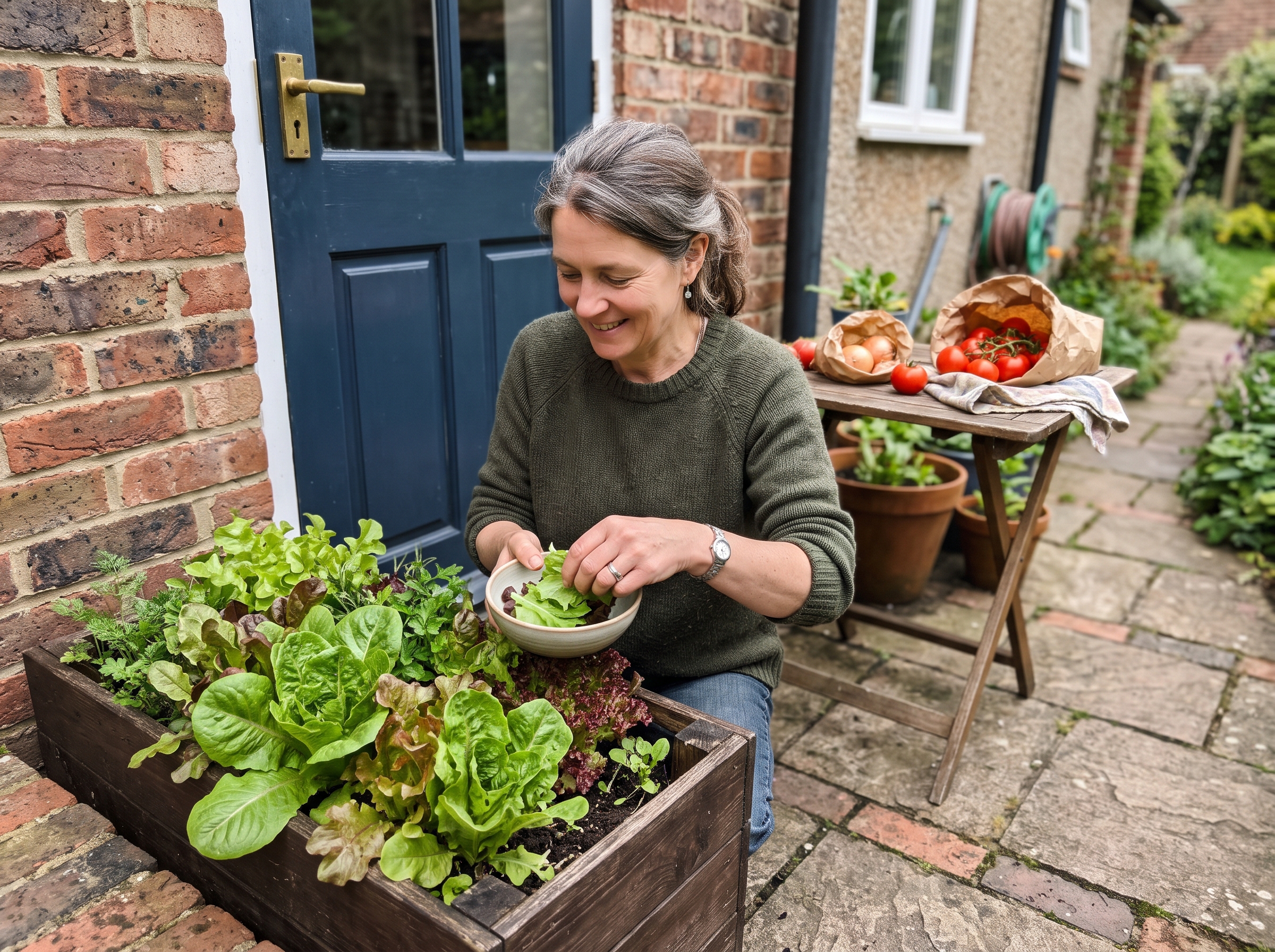
That bag of greens runs out. The next one costs money, too. What if some of your next meal was still growing at home?
The COMPLETE Blueprint shows the small-space steps in pictures. Start indoors with a simple light, or use a little patio space.
You do not need to turn your life into a gardening project. See the first food you could start with—and the simple setup behind it.
| Tap Here to See the COMPLETE Blueprint → |
Stay steady,
Sam McCoy
4 Foot Farm Blueprint
P.S. Which food do you buy again as soon as it runs out? Reply with its name. Forward this to someone who wants to grow a little of it at home.
P.P.S. Already have the COMPLETE Blueprint? Put the steps beside your pots instead of hunting through your phone. The printed, spiral-bound Field Guide lies flat while you work. Tap Here to See the Printed Field Guide →