
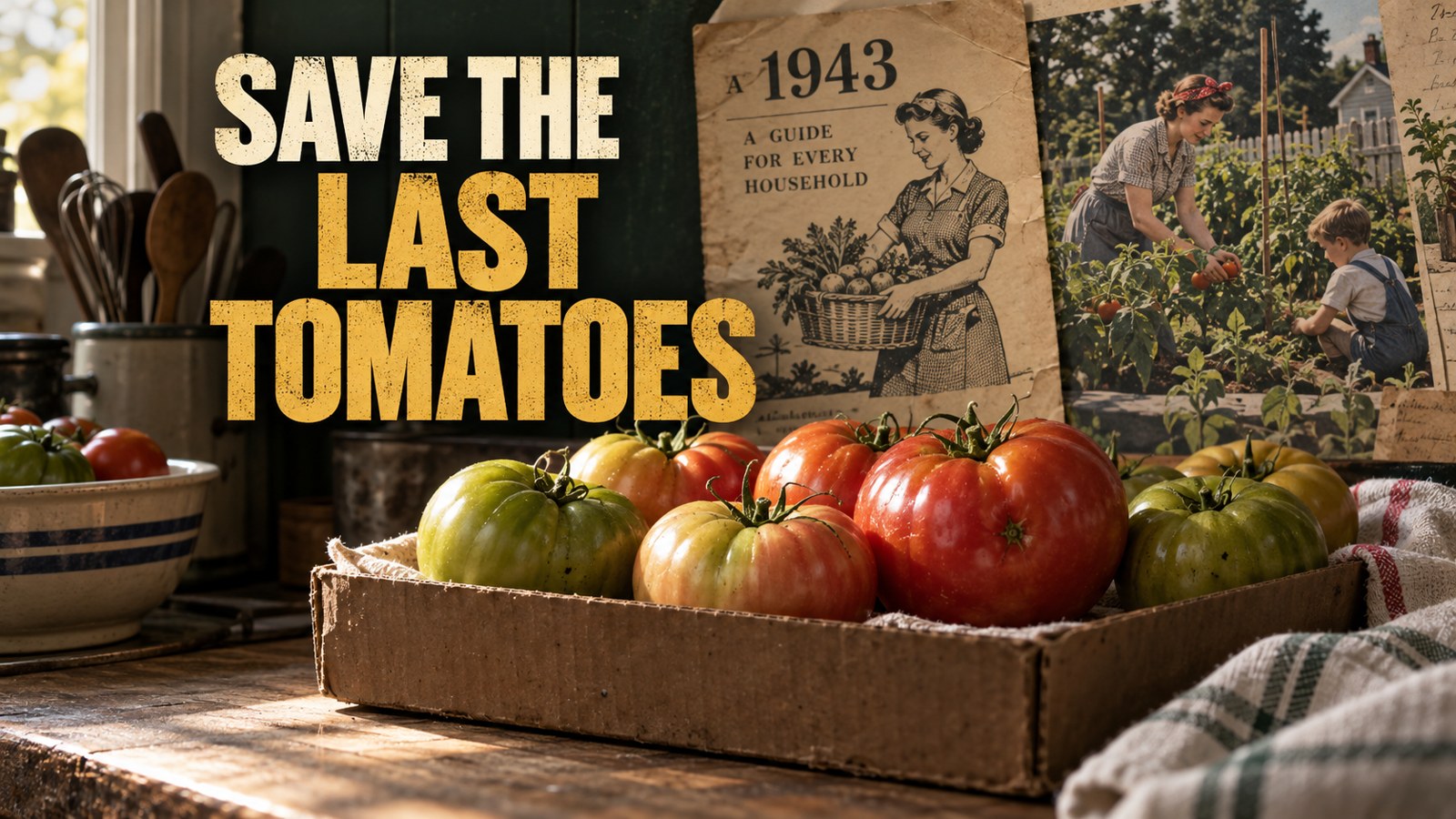
Your Daily Install connects what’s happening now with a useful pattern from the past—and one simple step you can take today to make your household more resilient.
Print the action worksheet below, fill it in, and add it to your Household Resilience Network binder.
What’s happening now?
You did the work. Now there are tomatoes on the plant that still are not red. A cold night is coming. Do you leave them—or lose them?
Fall frost is the issue this week. Missouri Extension’s October 19 reminder urges growers to prepare before cold weather ends the season. Your local forecast—not a date on a national calendar—tells you when to act.
Some full-size tomatoes can finish ripening indoors. You do not need to put them on a sunny windowsill. If your outdoor harvest is already over, keep this page for next season.
Has this happened before?
In 1943, families were asked to grow more of their own food. But a basket of vegetables was only the first half of the job.
USDA’s Victory Garden program also called for harvesting and saving the crop. School gardens needed plans for who would pick the food and prepare it for school meals. Household groups taught food-saving skills alongside food growing.
A crop left too long could become waste. The plan had to reach past the day it was planted.
What happened next?
Food-preserving lessons and local help became part of the same effort. The harvest needed a next step, not just a celebration.
The pattern: decide where food goes before the weather decides for you. We are not copying 1940s canning methods. Today’s small step is simply choosing sound tomatoes that can finish indoors.
You know the face. Where’s the name?
You know exactly who you mean. Then you talk around the missing name. Why does this memory-support story start with a “memory bean”?
Tap Here to Watch the Memory-Bean Story →What can I do?
Give this 15 minutes. Before frost, pick full-size, firm tomatoes that are healthy and already showing a little pale or pink color. Skip split, rotten or frost-damaged fruit. Very small, deep-green tomatoes may never ripen well.
Lay them one layer deep in a shallow tray at room temperature, out of direct sun. Leave space between them. Check each day. Remove any that spoil, and use the ripe ones first.
Write the tray’s check date below. No crop left outside? Pick one tomato-based meal you want to grow food for next season and file this sheet with that plan.
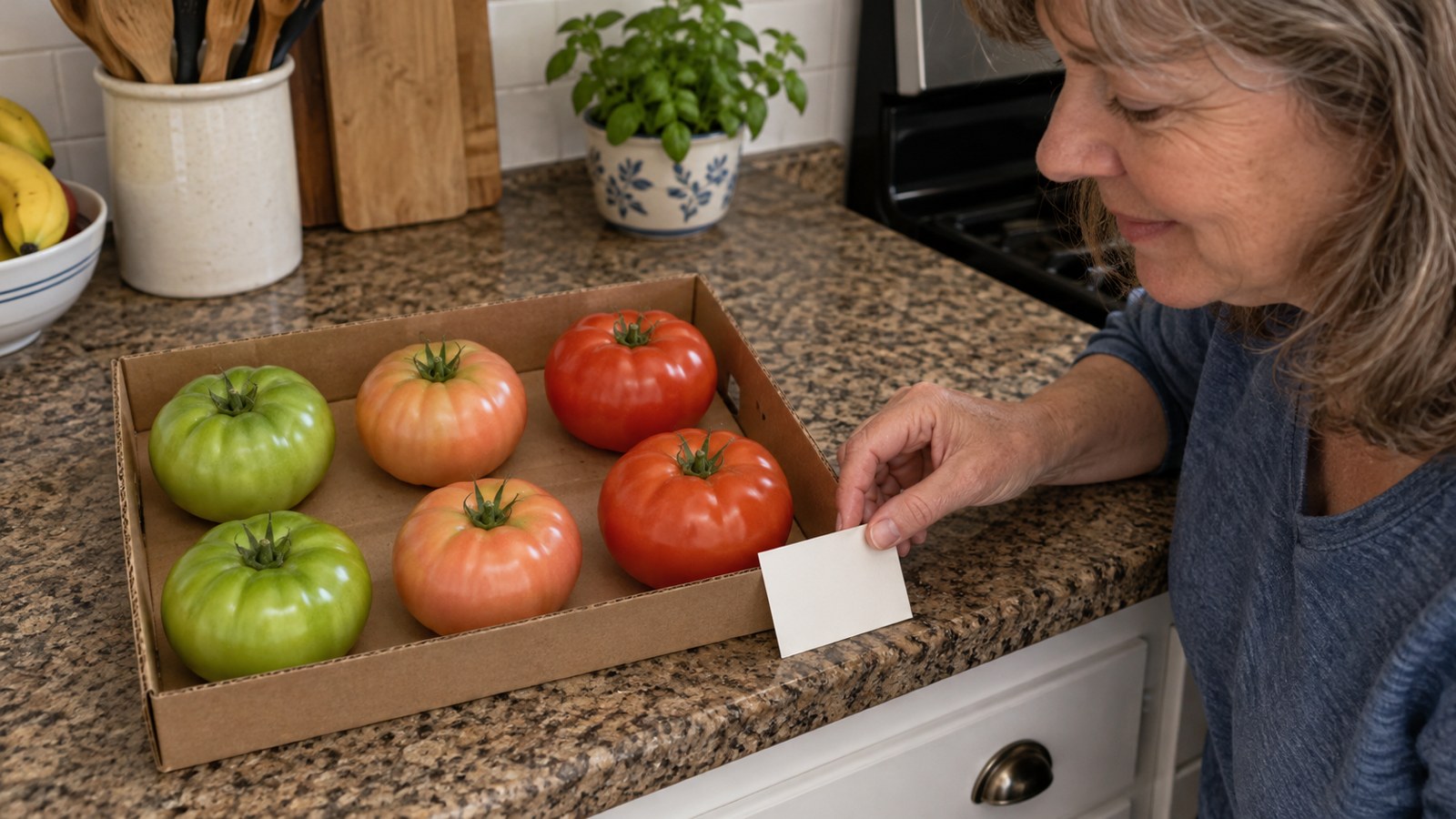
Illustrative household example. Use the worksheet for your own details.
My Last-Tomato Plan
Date: __________ File under: Food Production
1. Check before picking
Local overnight forecast:
Pick by:
☐ Full-size and sound ☐ Frost damage rejected
2. Give the fruit a place
Tray location:
Number set aside:
☐ Single layer ☐ Out of direct sun
3. Keep it moving
Daily check time:
First meal for ripe fruit:
4. If the season is over
Food I want to grow next:
Where I will keep this sheet:
Today’s win: Sound late tomatoes have a checked indoor spot and a daily check—or next season’s food goal is on paper.
Put a little of dinner back in your hands.
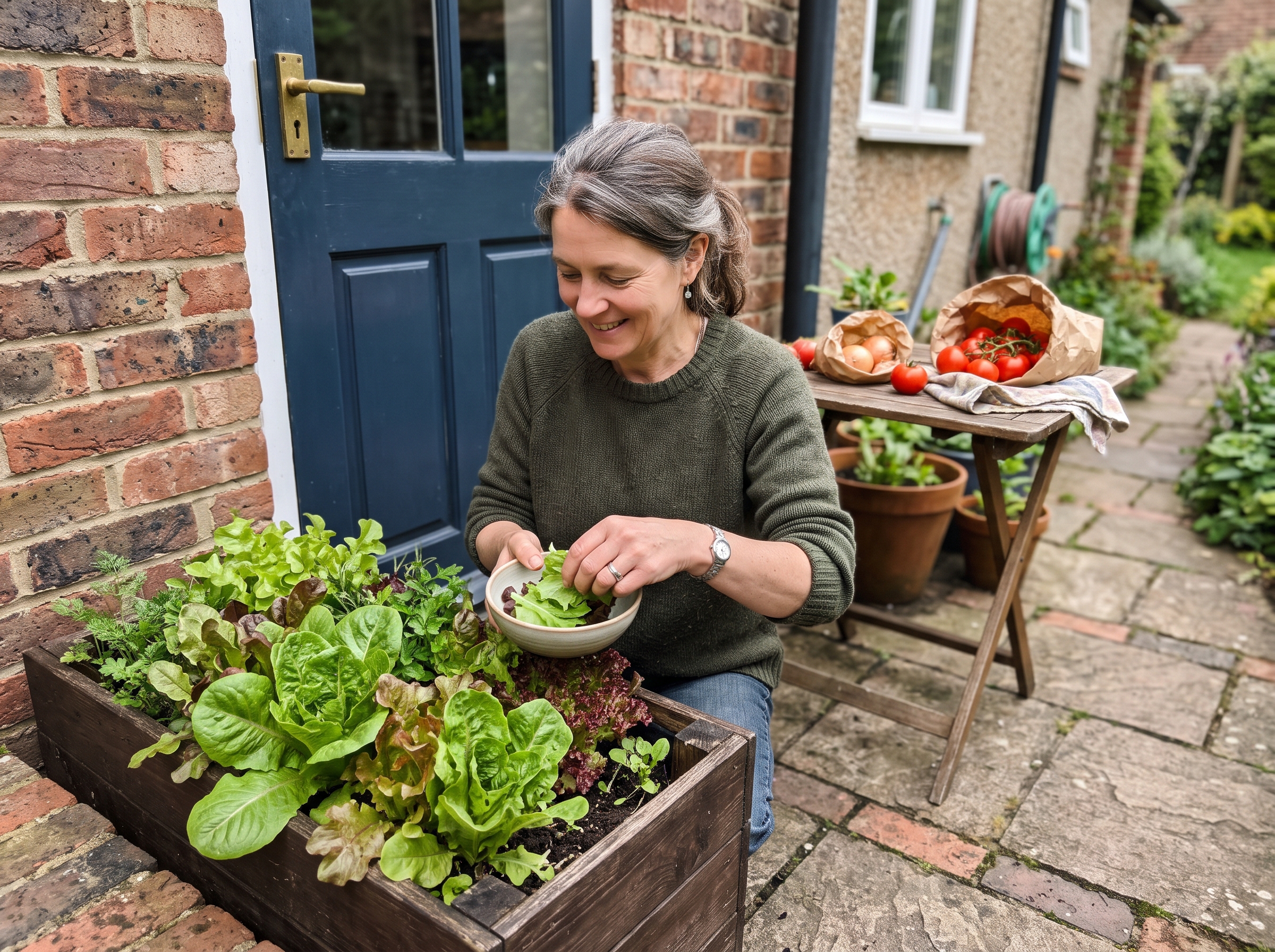
You want fresh food you feel good about. You want some say in what it costs, too. Start with one food you already love to eat.
The COMPLETE Blueprint shows the steps in pictures, with small-space setups and indoor options using a simple grow light. See how a little food at home can become part of your normal week.
| Tap Here to See the COMPLETE Blueprint → |
Stay steady,
Sam McCoy
4 Foot Farm Blueprint
P.S. Have you ever brought the last tomatoes inside? Reply with what worked. Forward this to someone watching the frost forecast.
P.P.S. One useful next read from the Household Resilience Network: Homestead Install: Follow the Water Before the Storm.