
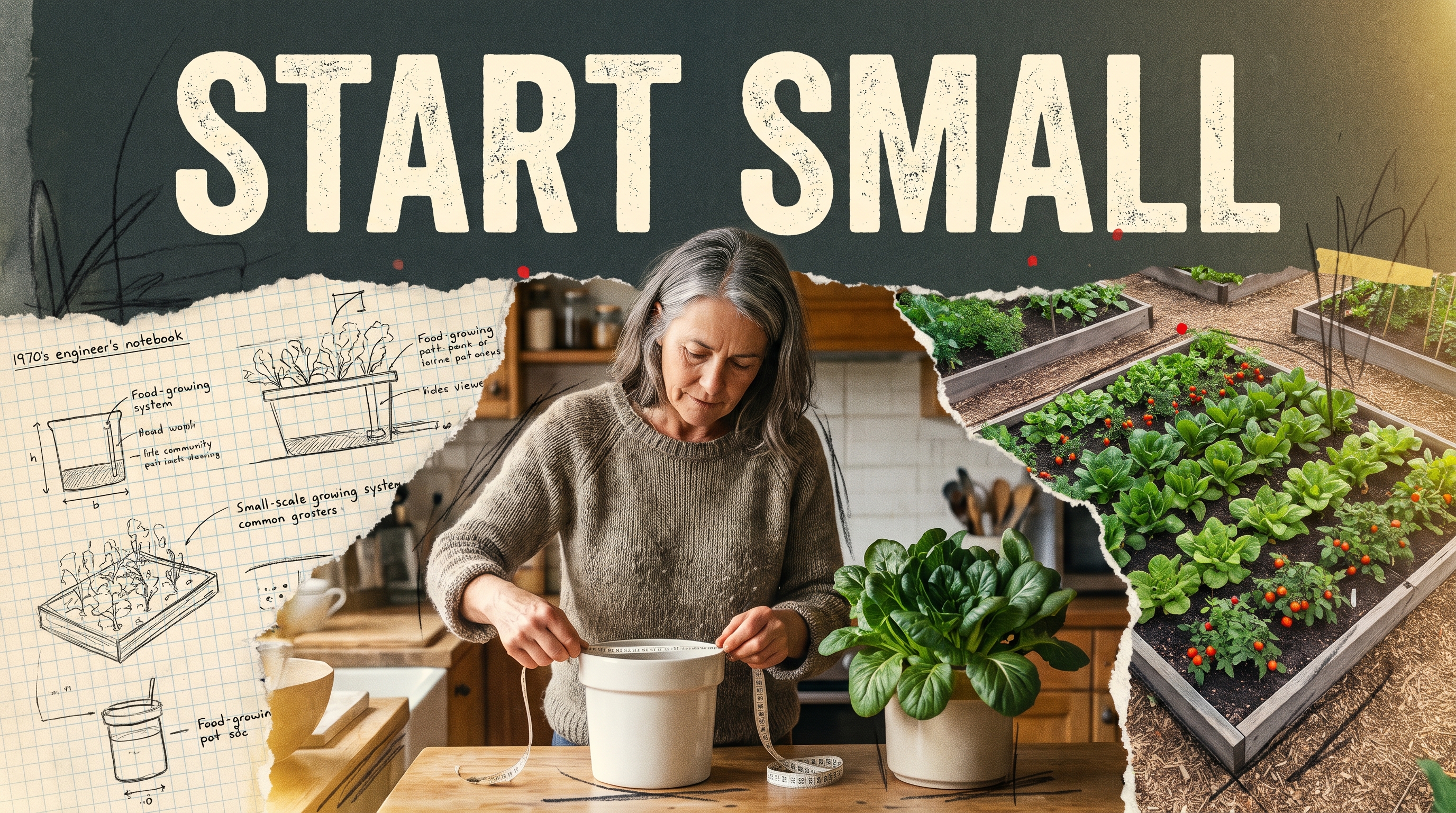
Your Daily Install connects what’s happening now with a useful pattern from the past—and one simple step you can take today to make your household more resilient.
Print the action worksheet below, fill it in, and add it to your Household Resilience Network binder.
What’s happening now?
You want fresh food at home. Then you see the pots, bags of mix and supplies. Suddenly a small food project looks like another big bill.
USDA updated its food-price outlook on October 23. Grocery prices are still a household concern. But spending more on a growing setup is not the same as getting more food from it.
Today’s check starts with the food—not the biggest pot on the shelf. A compact crop can have a small, useful home. A larger plant needs more room for roots. Match the two before you spend.
Has this happened before?
After retiring in 1975, engineer Mel Bartholomew joined a community garden. He found long rows, empty walking space and more work than he thought a household food plot needed.
The usual answer was to keep doing it the old way. He asked a different question: how much space did each plant actually need?
In 1976, he developed a small-space method built around square sections. He changed the layout instead of asking each beginner to work harder.
What happened next?
His first Square Foot Gardening book came out in 1981. A television series later carried the method into more homes. The useful change was simple: plan the growing space around the crop.
Your indoor pot is not his raised bed. The shared pattern is to remove wasted space and effort before adding more supplies. Small does not mean cramped. It means sized for the job.
You pull it out. Could it be food?
That yellow weed gets yanked out without a thought. What would someone who knew wild food notice first?
Tap Here to See the Wild-Food Guide →What can I do?
Take 15 minutes. Match one pot to one food you eat. Choose a compact herb or leafy crop you would use in a real meal. Check its mature size and container needs with your local Extension service or the plant directions.
Measure the pot you already own. Check for drainage holes and a tray. Use a clean container meant for food growing, never one that held chemicals. Choose potting mix made for containers.
Put the matching pot and tray in the spot you will use. A suitable window or compact grow light can supply light; follow the crop and light directions. If the pot is wrong, write down the size you need before buying. You have replaced a guess with a checked setup.
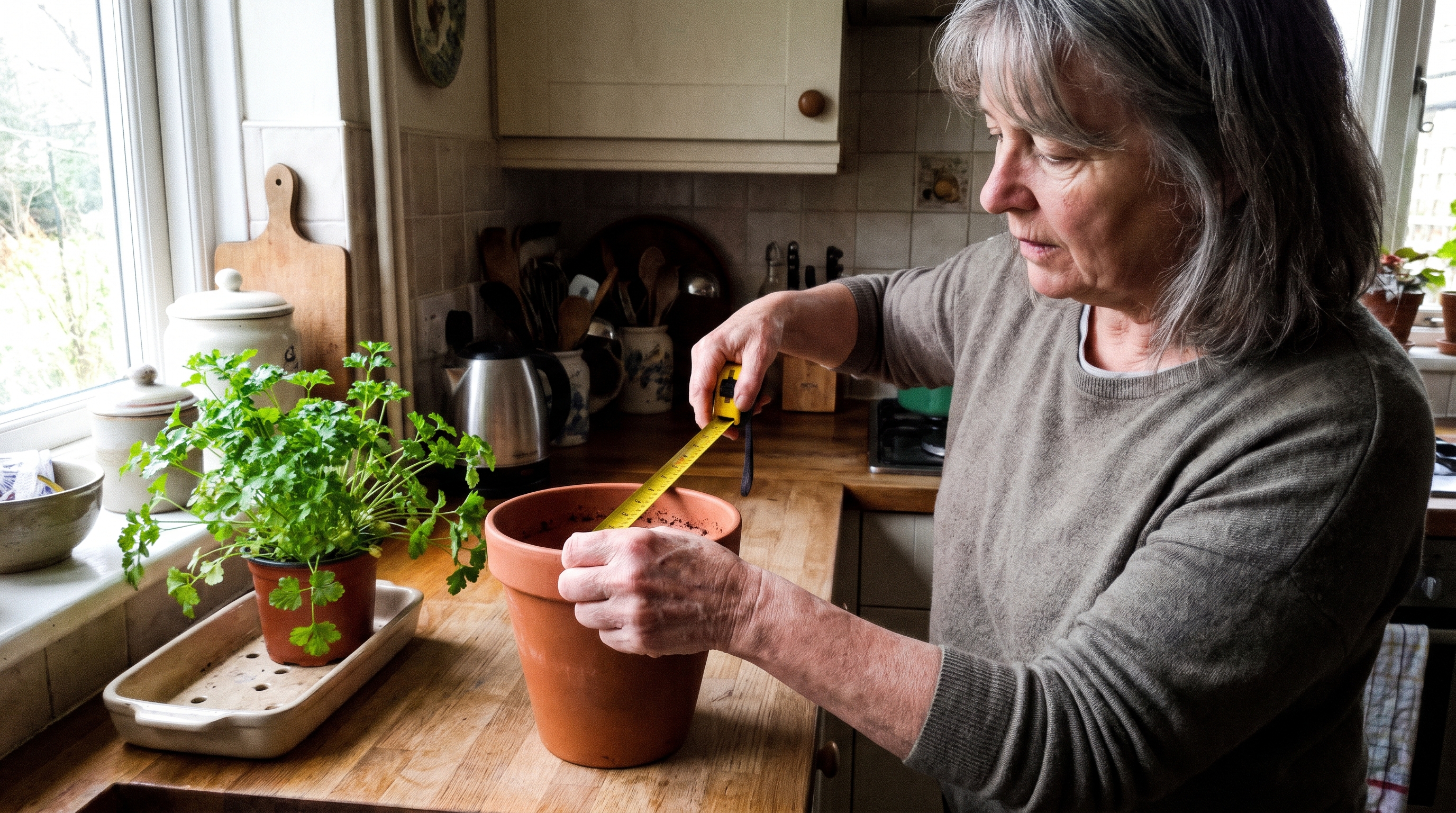
Illustrative household example. Use the worksheet for your own details.
My Pot-and-Food Match
Date: __________ File under: Food Production
1. Start with a meal
Food I want to grow:
Meal we will use it in:
How often we buy it:
2. Check the fit
Crop / variety:
Required pot width / depth:
Where I checked:
3. Use what works
My pot width / depth:
☐ Clean, suitable container ☐ Drainage holes
☐ Tray ready ☐ Pot and crop match
4. Finish one step
☐ Matching pot set out ☐ Correct size listed
Light source:
Only missing supply:
Today’s win: One crop has a checked container size, and a matching pot is ready—or the exact missing size is on your list.
Stop buying every bite from someone else.
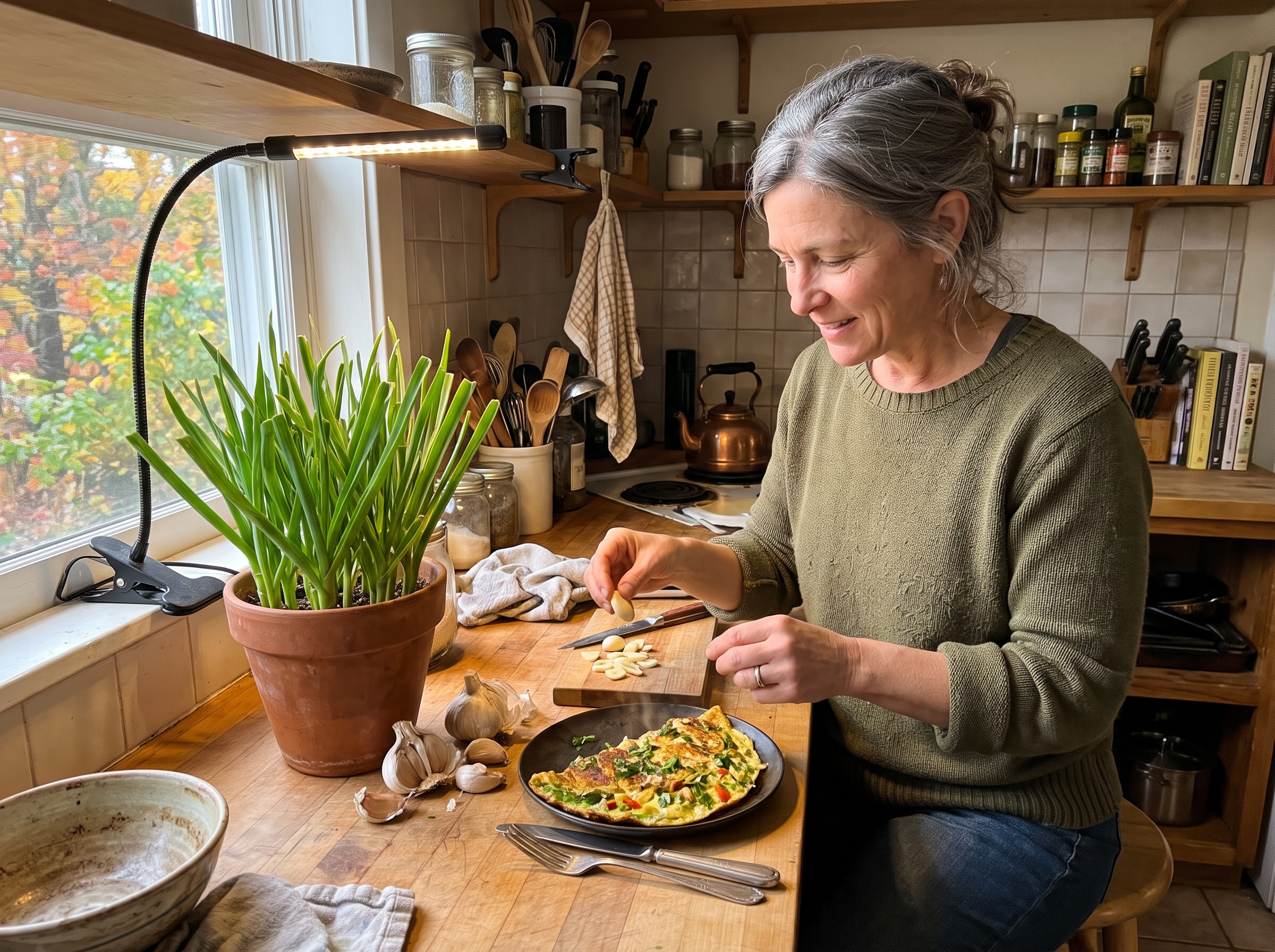
You buy the same fresh foods again and again. Then another grocery run takes another bite from the budget.
Put one small part of that food supply at home. The COMPLETE Blueprint shows the steps in pictures, with small-space and indoor options.
Which foods let you pick a little and leave more growing? Tap below for the simple starting point.
| Tap Here to See the COMPLETE Blueprint → |
Stay steady,
Sam McCoy
4 Foot Farm Blueprint
P.S. Which food would you most like to pick at home? Hit reply with just the food. Forward this to someone who thinks starting small still means buying a cart of gear.
P.P.S. One useful next read from the Household Resilience Network: Homestead Install: Food Costs More. What Did Families Do Before?.