
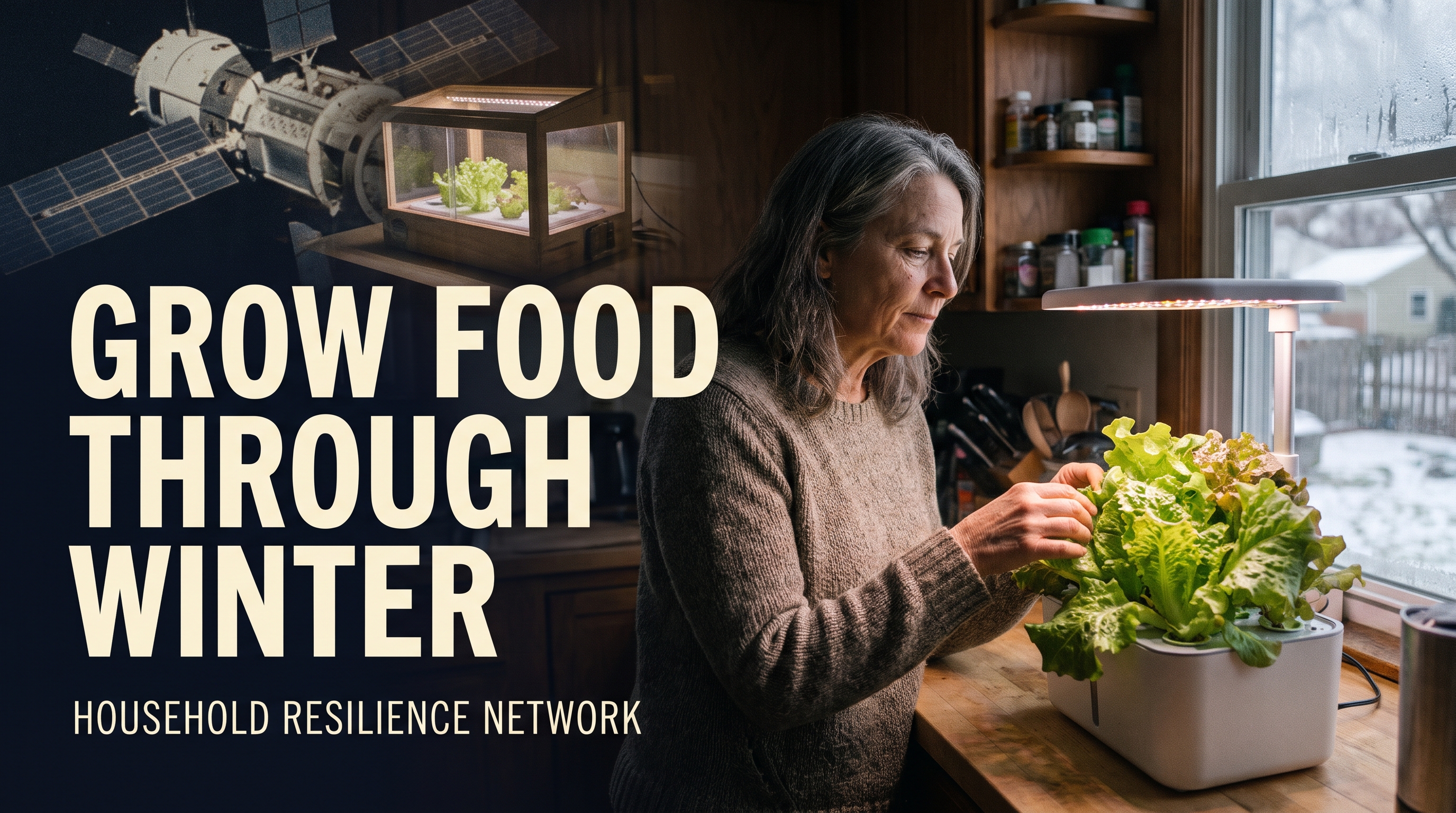
Your Daily Install connects what’s happening now with a useful pattern from the past—and one simple step you can take today to make your household more resilient.
Print the action worksheet below, fill it in, and add it to your Household Resilience Network binder.
What’s happening now?
On Sunday, November 1, most of the U.S. turns the clocks back. Dinner will arrive with less daylight left on the clock. NIST confirms the change happens at 2 a.m. local time.
If you want to grow some food at home, that can sound like a reason to wait for spring. A small grow light gives you another option.
The useful question is not whether you can turn the whole house into a farm. It is whether one food plant can get the light and care it needs in one small spot.
People have solved a much harder version of that problem—with no backyard at all.
Has this happened before?
In July 2015, Scott Kelly had a food project with no backyard, no porch, and no quick trip to the store. He was aboard the International Space Station.
On July 8, he started a crop of red romaine lettuce. The seeds sat in small rooting packs called plant pillows. Above them, red, blue and green LED lights supplied light for growth.
This was NASA’s Veggie experiment: a small test of growing fresh food where the crew lived. Kelly and fellow astronaut Kjell Lindgren cared for the plants.
What happened next?
After 33 days, they had lettuce to harvest. On August 10, the crew ate half of the leaves and saved the rest for testing. An earlier crop had already passed food-safety checks.
The meal had a simple finishing touch: olive oil and balsamic vinegar. Food grown right there was now part of dinner.
They had not replaced their food supply. They had added something fresh to it.
That is the useful pattern: when you depend on food arriving from elsewhere, growing a little where you live gives you another source.
Your kitchen is a different place, with a much simpler job. You can start with one food plant, suitable light, and a routine you can keep. The question becomes: What could I grow here, instead of buying every bit of it?
What food have you been walking past?
That patch beside the path looks like weeds. But could you tell a useful plant from a dangerous look-alike?
Look at the plant photos inside Foraging Secrets.
See what to look for before you decide that everything outside the vegetable patch is just something to pull up.
What can I do?
Set and test one grow-light timer today. Give it 10 minutes if you already have a suitable light, plant and timer.
Check the light hours for your crop and the maker’s distance from the leaves. Set the timer, test its on/off switch and record the schedule below. Keep the plugs dry. Plants need a daily dark period, too; leaving the light on all night is not a shortcut.
For example only, a crop suited to 14 hours of light could get it from 7 a.m. to 9 p.m. Use the hours for your crop. No light yet? Clear and measure the spot, then write the crop and light you need before buying.
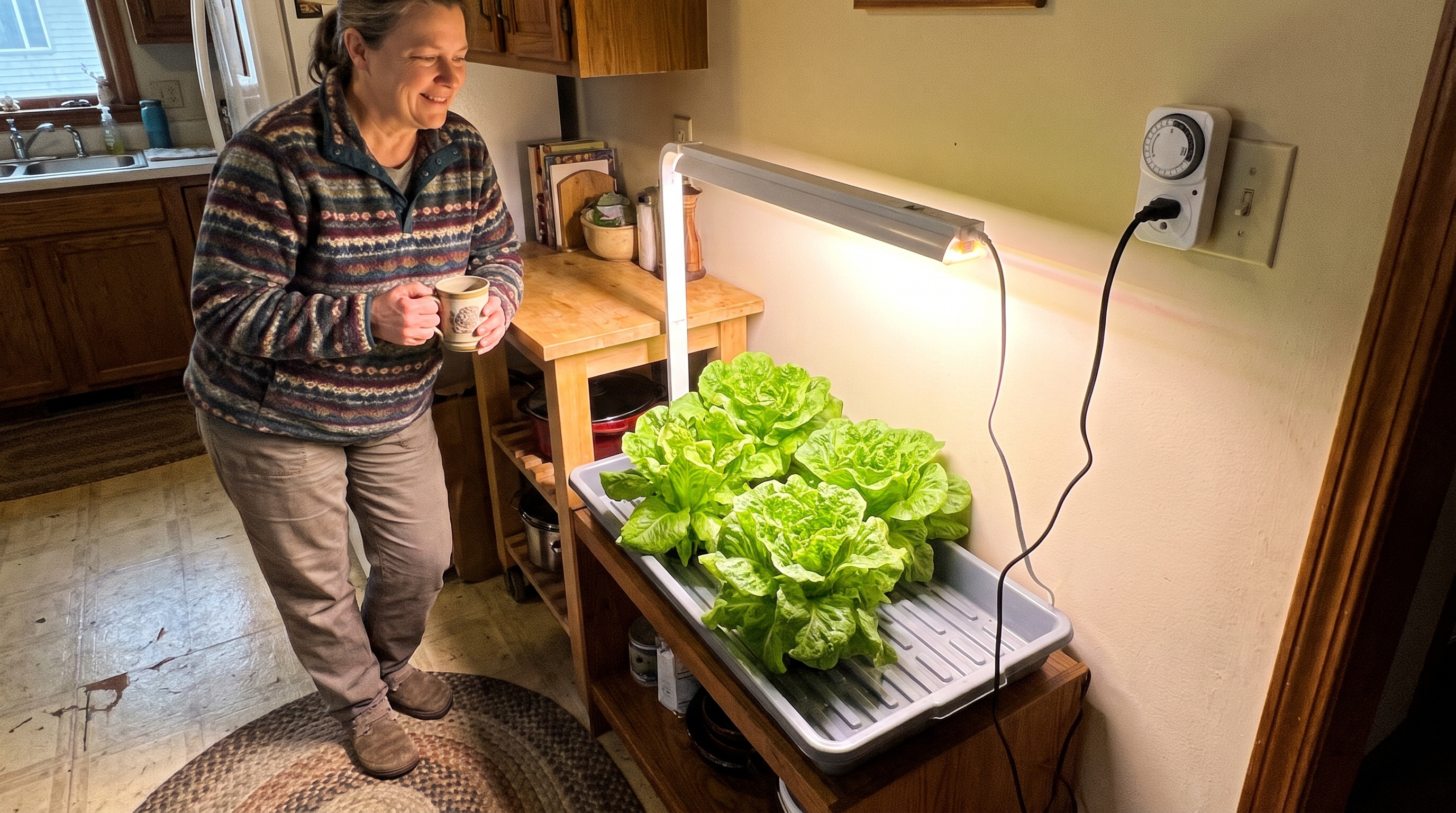
Illustrative indoor food setup. Give a suitable crop steady light and a daily dark period.
My Indoor Food & Light Plan
Print, fill in and file under Food Production. Set and test one timer, or clear and measure the spot for your first setup.
1. Choose the crop and place
Food plant:
Indoor spot:
☐ Spot cleared; space measured
Space: _____ inches wide x _____ inches deep
2. Check the light
Crop’s daily light hours: _____
Where I checked:
Light / maker’s distance: _________________
☐ Light and timer are compatible; plugs stay dry
3. Finish the setup
Light ON: ______ Light OFF: ______
Hours on: _____ Hours off: _____
☐ Timer set and tested off, then on
☐ No light yet: spot ready; supplies listed
Only supplies needed:
4. Check the result
Starting photo taken:
One-week growth check: _________________
What changed?
What other food could we grow here?
Follow crop and light/timer directions. Keep electrical parts dry. A light schedule supports growth; it does not guarantee a harvest.
Today’s win: a timer set and tested—or a real spot cleared and measured. You have put one part of a food-growing routine in place before winter.
You have bought those greens enough times.
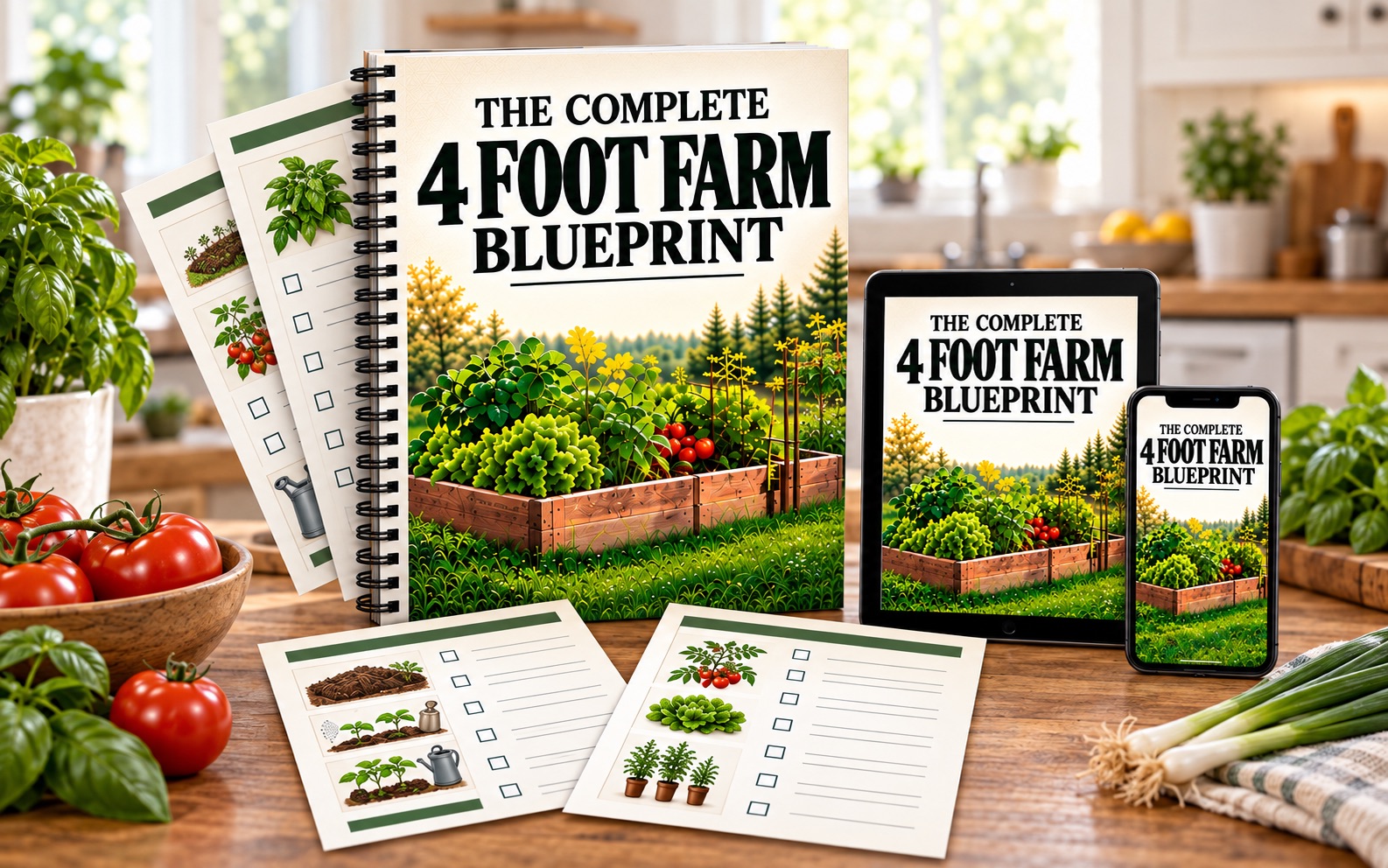
Another grocery run. Another bag of greens. Another pack of herbs. Wouldn’t you love to pick a little of that food at home instead?
Let’s get your first small setup going. Our COMPLETE Blueprint gives you the steps and pictures to follow. Pick one food you love. Use a small space. Add a simple grow light indoors when you need it.
Tap below. See how to start growing food where you live—even before spring.
| Tap Here to See the COMPLETE Blueprint → |
Stay steady,
Sam McCoy
4 Foot Farm Blueprint
P.S. What is one food you would like to grow at home instead of relying on the next store trip? Hit reply with its name. Forward this to someone who thinks they must wait until spring.