
4 Foot Farm Blueprint · DAILY INSTALL

OCTOBER 23, 2026 · ILLUSTRATIVE EDITORIAL COLLAGE
You chop the green tops for dinner. The little white ends go toward the trash.
Keep three with sound roots. You already paid for your first small growing project.
SPONSORED · Renew
Why are people talking about this salt-water video?
Why would a weight-control video open with salt water?
The name gives away very little. Tap below and see the idea behind it.
Today’s Install: The Green-Onion Restart
Time: 15 minutes. Cost: Use what you have. Keep: One dated check, photo or household note.
Three rooted onion bases are planted, have a light source, and have a one-week check date.
For your binder: Print this issue or keep the dated note with your household plans.
Action Brief
Read the signal: Late October does not put food growing on hold. A small indoor start can fit on a kitchen shelf while outdoor conditions change.
See the pattern: A useful food project can start with one part of a meal you already eat.
Make the move: Three rooted onion bases are planted, have a light source, and have a one-week check date.
The Current Signal
Late October does not put food growing on hold. A small indoor start can fit on a kitchen shelf while outdoor conditions change.
Illinois Extension shows how rooted green-onion bases can grow again. A bright spot or a simple grow light can help you begin. Today is a restart—not a promise that one bunch will feed you forever.
The golden nugget: A useful food project can start with one part of a meal you already eat.
QUICK SPONSOR · 4Patriots
When the store trip falls through, what is for dinner?
The fridge is nearly empty. The family is not. A shelf-stable meal supply gives you another place to turn. Which meals would you want waiting? Keep water and the safe cooking setup the meals need ready, too.
America, 1918: Beginners Had a Place in the Food Plan

Illustrated historical reconstruction; not an archival photograph.
In 1918, a child could join a food effort without being a farmer. The United States School Garden Army gave school and home growing a place in the country's wartime work.
One surviving poster shows children working the soil. Another calls on young people to enlist. These were posters for a real program, not evidence that every child produced a huge harvest.
The Bureau of Education put instructions behind the appeal. Its work linked the garden at school with the small growing space at home. Food did not have to begin on a distant farm in order to count.
Imagine the first lesson in an ordinary plot: a row, a few seeds, a tool someone shows you how to hold. That scene is an illustration. The program and its teaching materials are documented by the Library of Congress.
The size of the public need could have made the job feel hopeless. A beginner could not solve wartime food supply. A manageable growing task gave that beginner something real to do.
There was still work after the planting. Soil needed care. Young plants needed water. A crop had to be picked and used. A poster could invite a child into the effort, but teaching and follow-through made the invitation useful.
That is the part worth bringing home. Start small enough to see what changes. Learn what the plant needs. Then connect the result to a meal.
You do not need a wartime slogan or a whole row of vegetables today. A few rooted onions are enough to practice the first step. The next lesson comes from watching them, not from buying a larger pile of supplies.
Pompeii: Food Grew Between the Buildings

Illustrated reconstruction; not an archaeological photograph.
Before the eruption of 79 CE, Pompeii held more than stone streets and painted rooms. Growing spaces were woven into the town.
The archaeological park describes an area now called the Garden of the Fugitives. Before the eruption, land that had held houses had been turned into a vineyard. It also had a covered outdoor dining space.
That is a useful change to notice. A town lot could do more than hold another building. It could support food and a place to eat it.
Elsewhere, the property associated with Julia Felix held rooms, a bath complex and large garden spaces. The surviving sites show different uses for planted ground. They do not show that every Roman household grew its own meals.
Picture a worker passing through a gate with a small tool and a basket. Buildings stand close by. The growing space is part of the lived-in town, rather than a separate world far beyond it. This is an imagined view based on the remains.
Pompeii's final day gives these spaces a tragic history. The lesson here is about their earlier use: people made room for living plants where daily life was already happening.
A grapevineyard and a pot of onions are very different projects. Nor does an ancient garden prove a modern savings claim. The narrower link is the place given to food production.
That place can be close enough to notice. When a plant sits where you prepare dinner, new growth becomes something you can see. A small start is easier to care for when it belongs in your normal day.
Today, make that place before you make the project bigger. Give three sound roots a suitable pot, light and a simple check date.
The Pattern to Notice
Across BOTH examples, the pattern is this: a useful food project can start with one part of a meal you already eat.
The Household Lesson
Use firm green-onion bases with roots attached. Skip slimy, moldy or bad-smelling pieces. This is a way to regrow greens, not a way to rescue spoiled food.
Put the plants where you can check them while making a meal. A small grow light can help when a window does not provide enough light. Follow the light maker's spacing and timing directions.
Your Household Install

Illustrative household example. Use the steps below for your own setup.
Keep three bases. Leave about two inches of sound white stem above the roots. Use the green tops in your meal.
Plant them upright. Use fresh potting mix in a clean pot with drainage holes. Cover the roots; keep the cut tops above the mix.
Water and place. Moisten the mix, let extra water drain, and choose a bright spot or suitable grow light. Keep the pot out of standing water.
Take a starting photo. Note the date. Check moisture before watering and compare growth in one week. Replace weak plants rather than expecting endless harvests.
Measurable win: Three rooted onion bases are planted, have a light source, and have a one-week check date.
Status Check
□ Three sound rooted bases are planted.
□ The pot drains and has a light source.
□ A starting photo and one-week check date are saved.
Tool That Fits Today’s Pattern
Your keep-it card: Planted on ___ / Light source ___ / Moisture checked ___ / One-week photo date ___
The Takeaway
A useful food project can start with one part of a meal you already eat.
Stay steady,
Sam McCoy
One useful step. A more capable home.
P.S. Which food would you most like to pick at home instead of buying again? Hit reply with the food. Forward this to someone who says they have no room to start.
P.P.S. Two useful next reads from the Household Resilience Network:
SPONSORED · 4 FOOT FARM BLUEPRINT
What if the next grocery trip needed less in the cart?
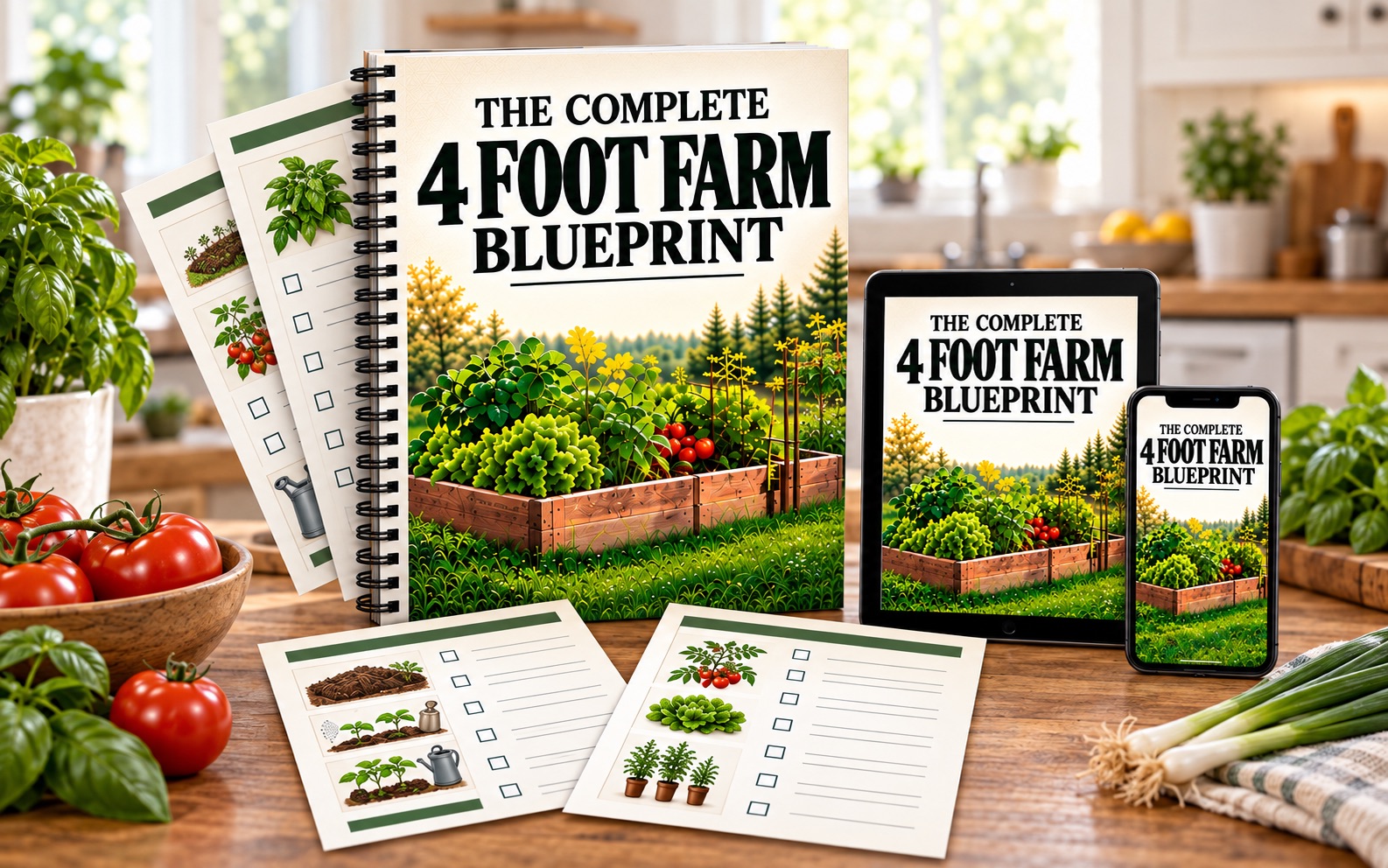
The same lettuce. The same herbs. Another trip to buy them again. What if a small spot at home supplied some of those repeat buys?
Our COMPLETE 4 Foot Farm Blueprint shows the steps in pictures. Start with one food you already eat, using a container, patio or indoor setup with a simple grow light.
See the first setup—and how to keep more fresh food coming without taking on a whole yard.
Sources reviewed for this issue: Illinois Extension, DIY: Regrowing Green Onions and Regrowing Scrap Veggies; Library of Congress, School Garden Army primary materials; Pompeii Archaeological Park, Garden of the Fugitives and Julia Felix. Seasonal indoor-growing edition, October 23, 2026. Historical scenes are illustrated reconstructions.